Category Archives: Business

Direct Sales Entry Strategies in Japan

Japan Entry Strategies

Japan Entry Strategies


GBMC Article published by the EU-Japan Centre for Industrial Cooperation:

.
1) in EU-JAPAN NEWS, in the Decembre 2014 edition of the Centre’s Newsletter.
Article to be found page 15 of the Newsletter:
http://www.eu-japan.eu/sites/eu-japan.eu/files/december14.pdf

.
2) permanently online, on the “EU Business in Japan” website:
http://www.eubusinessinjapan.eu/library/publication/article-direct-sales-entry-strategies-in-japan

.


Why Invest in Japan?

Why Invest in Japan?

Why Invest in Japan?


In 2012, the EU-Japan Centre for Industrial Cooperation carried out a Survey of EU SMEs on their Internationalisation towards Japan (Source: In Search for Growth: Towards a New Role for SMEs in EU-Japan Relations, EU-JAPAN CENTRE FOR INDUSTRIAL COOPERATION 2013).

The obstacles most often mentioned by respondents (126 European SMEs) included: 1. Language barriers (55%), 2. Difficulty to grasp business practices, 3. Costs, 4. Difficulty in understanding the local laws or regulations, 5. Conforming to Japanese standards.

Knowing that exporters are conscious of the importance of cultural factors in doing business with Japan, this cultural gap can be problematic.

So why bother going to Japan, investing time and money in entering the Market?

There are many good reasons, some of them being strategic like:

1) “We feel that the quality of our products and the company as a whole have benefited a lot from our relationship with Japan” (Helioscreen NV in 1997)

2) “For any company engaged in product innovation, quality control and focused on creating brands with their own identity on a daily basis, the Japanese market is one of the most important in terms of business value and potential company growth” (Francesco Vespasiani, VUEFFE Srl, Italian leather footwear producer, in 2013).

3) Japan is a key Market and a gate to other Asian Markets: the enormous influence of its Retail Industry attracts global attention and is at the origin of many Asian trends.

Last but not least,

4) Japan is a great Retail Laboratory, where new B2C concepts are localized and developed.

There is a prevalent myth that it is a country with a monolithic culture and uniform tastes, but a walk in Shibuya, Harajuku or Shinjuku (distinct areas in Tokyo) will proof you the opposite and show you various lifestyle choices. In his book Japanese Consumer Behavior, John Mc Creery wonders: “Can we safely ignore the fact that , while all these generations have grown up in a place called Japan, each has come (or is coming) of age in a radically different world ?”.

Mc Creery also points out that:

– even the Japanese “salaryman” has different faces: his private self, his work self, his social self and his family self are all different, with distinct consumer preferences.

– Women, children and the elderly, often neglected in a generic image of Japan Inc, are also important customers and have their own lifestyle patterns.

Finally, in his analysis of key characteristics of Japanese consumer behavior, Renaud Pretet concludes in 2010 that: “there are still various segments with potential on the Japanese market, the most obvious one being that of senior consumers. Retailing in Japan requires a complex mix of humility and audacity in a mature market that seems to be evolving towards more conscious consumption. Some industries, such as luxury brands, will have to reinvent themselves in the next decade. More than ever, Japan remains a Retail Laboratory and interesting experiments are to be closely monitored.”

So why Invest in Japan?

1) A tremendous market:

– A huge and homogeneous market: an advertising campaign in a newspaper can reach up to 17 Millions of consumers with a strong buying power and with similar tastes

– A market where customers fully appreciate technological features of a product and are also ready to pay for it.

2) An Innovative market:

– Innovation is everywhere. Some SMEs are leaders in their field and, in some cases, own some unique technologies.

– Japanese companies are open to alliances with companies allowing them to broaden their portfolio or to tap into new foreign markets.

3) A door to the Asian market:

Japan being the first investor in China, it is also a business platform towards the rest of Asia, where the future growth lays.

4) A market full of opportunities:

– the 2008 crisis has brought new incentives and opportunities for investment, making entry strategies less complex and less expensive than in the past.

– the Reconstruction Process after the 2011 earthquake disaster has also triggered lots of incentives and tax breaks in the Tohoku Region, from which foreign investors can benefit.

For these reasons, there has never been a better time to enter this market!


Sources:

1) Get to know your client and adapt, Philippe Huysveld, Market Report (60 pages) for the EU-JAPAN CENTRE FOR INDUSTRIAL COOPERATION, October 2013. (Internet link: http://www.eubusinessinjapan.eu/library/publication/report-get-to-know-your-client-and-adapt)

2) Japan Entry Strategy, Philippe Huysveld, Market Report (60 pages) for the EU-JAPAN CENTRE FOR INDUSTRIAL COOPERATION, November 2013. (Internet link: http://www.eubusinessinjapan.eu/library/publication/report-japan-entry-strategy)



HAPPY NEW YEAR 2015 !!

新年明けましておめでとうございます。

新年明けましておめでとうございます。

BONNE ET HEUREUSE ANNEE 2015 !
.
We wish you a Happy New Year 2015 and we are looking forward to keeping in touch, working, engaging or exchanging with you again this year !
.
In 2015, please feel free to contact us, to join our Mailing List (your can subscribe for free on our website), as well as to follow us on our Blog (www.gbmc-blog.biz) or to check regularly our website (www.gbmc.biz) for updates.
.
Best Wishes,
.
The GBMC Team
EU-Japan Business Consultants
GBMC (Global Business & Management Consulting)
Paris area, France

MERRY CHRISTMAS and HAPPY NEW YEAR 2015 !


Merry Christmas and a Happy New Year !!

Merry Christmas and a Happy New Year !!

.
JOYEUX NOEL ET BONNE ANNEE 2015 !
良いお年をお迎え下さい。
.
We wish you a Happy End of the Year Holiday and we are looking forward to keeping in touch, working, engaging or exchanging with you again next year !
.
In 2015, please feel free to contact us, to join our Mailing List (your can subscribe for free on our website), as well as to follow us on our Blog (www.gbmc-blog.biz) or to check regularly our website (www.gbmc.biz) for updates.
.
Best Wishes,
.
The GBMC Team
EU-Japan Business Consultants
GBMC (Global Business & Management Consulting)
Paris area, France

The 5th EU Japan Economic Forum 2014

EU Japan Economic  Forum

EU Japan Economic Forum

The EU Japan Economic Forum 2014

Summary Report


This report tracks the insights and discussions of Asia Matters’ 5th EU Asia Top Economist Round Table, the ‘EU Japan Economic Forum’ that took place in Tokyo on 14 November.

The event focused on three key topics impacting EU Japan economic relations:

– Assessing Abenomics: The Lasting Impact for the Japanese Economy

– Concluding the Japan EU EPA

– Challenges on the Path to 2015

– Focus on Foreign Direct Investment: Two way investment between Japan and the EU.

The fifth edition of the one-day C-summit style conference followed the success of previous TERTs in Dublin and Tokyo and featured top economists, key speakers from Nissan, Philips, BNP Paribas, as well as senior government officials from METI, MOFA, JETRO and the EU Delegation. Forum held in partnership with EBC, EU Japan Centre , EUSI, Keizai Doyukai and JETRO.

Source: Asia Matters:

http://issuu.com/asiamatters/docs/asia_matters__tokyo_tert_2014_repor/3?e=11981954/10496491


EU Business in Japan: Airbus Delivers Training Helicopters to Japan


TH-135_©_Copyright_Airbus_Helicopters_Japan%20-%20Chikako_HIRANO

TH-135_©_Copyright_Airbus_Helicopters_Japan%20-%20Chikako_HIRANO


The TH-135 is a variant of Airbus Helicopters’ light twin-engine EC135 T2+ that has been customized for the JMSDF, and is meant to replace its single-engine training helicopter fleet. Deliveries of the TH-135 began in 2009 and have been in operation since 2011. Read more (Source: Aviation Today):

http://www.aviationtoday.com/the-checklist/Airbus-Delivers-TH-135-Training-Helicopters-to-Japan_83666.html#.VIQajOnu3IU


Which Future for Industries in Europe and in Japan ?


The Future of Industries in Europe and in Japan

The Future of Industries in Europe and in Japan


On Novembre 27th, we took part to the Symposium “The Future of Industries” organised in Brussels (Belgium) by the EU-Japan Centre for Industrial Cooperation and the “Fondation France-Japon” of the EHESS (Ecole des hautes études en sciences sociales, Paris).

More information about the Event can be found in one of our previous posts on the same Blog:  https://gbmc-blog.biz/2014/11/05/announcement-symposium-the-future-of-industries/

The objective of this symposium was to provide a unique forum to discuss the future of industries in Europe, in Japan and in Korea. Attended by about 50 motivated academics, company executives and policy-makers, this event concluded a 3-year study on the issues of industries coordinated by the EHESS.

The one-afternoon program was packed and consisted in about a dozen presentations given by academics, business executives and policy-makers. The content of most presentations was interesting, providing a wide overview of the problem. Unfortunately, the Q&A sessions were too short (10 minutes each), no summary was made and no general conclusions were drawn at the end of the symposium.

Therefore, we are thinking of having an article published about it but, meanwhile, a few key points of the symposium are:

– Innovation is a key factor, as illustrated by the presentations of HITACHI (Customer-driven research using Big Data Analytics for Social Innovation Business), VALEO (30% of new order intakes involve innovation and 10% of sales are dedicated to R&D) and AIR LIQUIDE (creation of i-Lab, working with start-ups and consisting in a “think tank” showing the direction and a “corporate garage” turning ideas into business).

– Other factors mentionned were: labour and energy costs, productivity improvements, good innovation environment (R&D tax credits and facilities)…

– Innovation is not everything, as underlined by the “Korean Success Story”: no cutting-edge technology but a good combination of various technologies, product marketing, benchmarking, speed and dedication.

– After a period of neglect, the EU Commission aims now at stopping the deindustrialisation trend in the EU, as highlighted by its Paper “Towards Industrial Renaissance”.

– With the Industry 4.0 Project, Germany set up a Digital Agenda and aims at important productivity gains through ICT.

– On the other hand, Japan’s R&D strategy seems ICT-orientated, supporting “Platform Business” (Smart Cities), “Next Generation Manufacturing” and “Convergence of Manufacturing & Service”.


Japan: Geothermal Power Plants cohabit with “Onsen” (hot springs) !

Onsen in Nagano

Geothermal Power Plants cohabit with “Onsen”


Read: ” Japan allows first geothermal power plant to be built inside national park” (Japan Daily Press, 2012):

http://japandailypress.com/japan-allows-first-geothermal-power-plant-to-be-built-inside-national-park-166685/#disqus_thread

There are many advantages and disadvantages, so what is your position about it ?


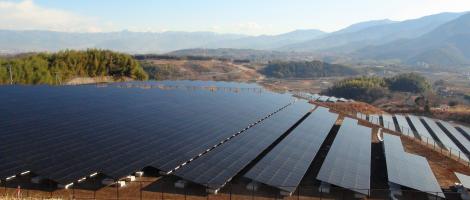
Mount_komekura_photovoltaic_power_plant

Solar PV Plant in Japan


If you are interested in Renewable Energies in Japan, also check our FREE REPORT at:

https://gbmc-blog.biz/2014/06/10/free-report-on-renewable-energies-in-japan/


Robotics in Japan: towards Human-Robot coexistence and cooperation !

What is the Future of Robots ?

What is the Future of Robots ?


Great Presentation “ Toward a new era of EU-Japan cooperation in Robotics: rationale and objectives”

and Insight from Masakatsu Fujie, Faculty of Science and Engineering, WasedaUniversity, Tokyo, Japan !!

ReadWaseda Presentation – Robotics Workshop

What is your take on the subject?


Green Business Practices in Japan


3Rs

3Rs


Green business practices that maintain and sustain good environmental quality are increasingly becoming a vital component of economic competitiveness. Consumer awareness of detrimental effects of products on the environment have promted many companies to incorporate environmental measures. These measures have concentrated on an expanded and inspired version of the original 3Rs: reduce, reuse and recycle.

Great Compilation by Hari Srinivas, UEMRI, Japan
(THE GLOBAL DEVELOPMENT RESEARCH CENTER) !!

Read:  http://www.gdrc.org/sustbiz/ebiz/all-biz.html


Design a site like this with WordPress.com
Get started