Category Archives: Invest

Visit and Invest in Belgium, at the heart of the EU! (new brochure)

Belgium (source: Wikimedia commons)

Belgium (source: Wikimedia commons)


“Belgium at a glance” is a digital brochure providing a light overview of what our country is all about. The brochure is richly illustrated with photos, making it highly accessible to anyone who wants to find out more about Belgium. The brochure is available in 8 languages.

DownloadBelgium_At_A_Glance_EN_LowRes_tcm312-250285


Source:


Shop & Travel in Belgium – Japanese edition !!

Shop and Travel in Belgium

Shop and Travel in Belgium


ショップ&トラベルベルギー2014-2015年秋冬号 /
Japanese Shop&travel in Belgium Fall-Winter 2014-2015.

Link:  Shop and Travel in Belgium Japanese FW 2014-15


Reporting on Renewable Energies in Japan.

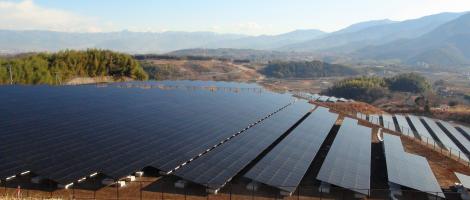
Solar PV Energy in Japan

Solar PV Energy in Japan


Spurred by the 1973 oil crisis, Japan led the global field in Green Energy R&D until the end of the 90s, when research budgets for renewable energies were cut. Since then and until the Fukushima accident in March 2011, the Japanese government has concentrated on nuclear and solar power generation, providing little support for other types of alternative energy.

In the present context of policy change, we now can state that:

  • the nuclear power production will probably never be back to the pre-Fukushima level,
  • with or without nuclear, Renewable Energies will expand,
  • diversification of energy sources, as well as quick distribution of technology for peak suppression and back up power, has become important.

As Japan’s hydroelectric potential is nearly saturated, since 2011, the Japanese government has been pushing other types of Renewable Energies (wind, solar, geothermal) by:

  • Easing regulations and restrictions on renewable energy projects
  • Requiring Japanese Utilities companies to buy electricity from renewable energy providers through a very generous Feed-in Tariff (FIT) system operated since July 2012.
  • Encouraging private companies and industries to invest and install solar (photovoltaic) panels.

The government objectives in terms of electricity production from renewable sources in Japan are also very ambitious: triple 2010’s green output by 2030 and reach a share of 30% of the total electricity production in 2030. The bulk of the growth efforts will be born by Solar PV, Wind Energy and to a lower extent, Geothermal Energy. Marine Energy growth seems to be more considered as a long-term project.

As a result, the number of solar PV (Photovoltaic) plant and wind farm Projects has expanded and the whole Renewable Energy Industry has boomed. Japanese conglomerates and shipbuilders, engineering contractors, trading companies and energy companies have moved into the renewable energy business.

However, Grid connection limitations could constitute a serious brake to this growth, as in Hokkaido where, in June 2013, developers of solar projects were forced to rethink their plans, as 70% of received applications for large-scale solar plants (87 projects out of a total of 1568 MW) were turned down.

BRAKE: since early 50s, Japan’s 10 Electric Power Companies (EPCs) reign over their respective geographic areas and networks. The interconnection between their grids are underdeveloped.

“The main regional utilities are named as a key obstacle to a shift to more renewable energy deployment in Japan” (German magazine Der Spiegel)

or, to quote Kosuke Kurokawa of The Japan Council for Renewable Energy,

Regional power utilities are not interested in competition and simply won’t work together.” (Source: ThinkGeoEnergy.com).


The Wind Energy segment

Japan has more than 20 years of research on floating structures, including for offshore wind. Various designs have been produced at a concept stage. Much of this research has been funded by the Japanese government but has not been commercialized by the Industry, as yet.

The situation has however changed positively now and recent Pilot Projects, under the supervision of NEDO, are looking for alternatives to onshore wind power installations.

(+): Marine Wind is typically strong and steady. Further, Japan’s territorial waters are much larger than its land mass, making it ideal for offshore wind power generation.

(-): Power output is not stable and there are Possible Storm Damages. Further, on land, in Northern Japan, turbines struck by lightning and damaged by earthquakes/typhoons/freezing constitute a serious issue. As accidents and security concerns are increasing, popularity for onshore wind power is in decline. Finally, it is necessary to cut the costs of installing/servicing and repairing wind turbines in order to fully take advantage of the generous FIT incentive system.

There are many Threats to the development of wind power:

Possible price competition from Chinese wind turbine manufacturers. The complex topography of Japan and restrictions on onshore/offshore locations are serious obstacles. Last but not least, there are environmental hazards for humans (health and security), for sea life and for birds.

But there are also opportunities for companies and investors:

About 75% of turbines are imported. There is a demand for high-performance turbines but product adaptation to the harsh Japanese weather conditions is critical. There is also a need to develop cost-effective floating technology. Finally, the lack of local service and maintenance could become a profitable business opportunity for subsidiaries of EU wind power companies.


The Solar Energy segment

Japanese solar energy companies have been making solar panels in Japan for a long time and have been leading the solar markets for the last few years. The country is among the world top countries with the most solar panels installed and connected to the grid.

(+): Modularity, high reliability and low operation costs

(-): High cost of installing solar panels, as well as of producing them in Japan, compared to China and other Asian countries.

There are threats to the development of solar power:

Difficulties in land procurement, possibly leading to speculation and a new bubble. Japanese makers have lost market share worldwide (including within Japan) due to the increase of low cost Chinese solar panels, which are becoming commodities, as they become largely interchangeable.

There is always space for manufacturers with innovative concepts or high-performance products. But there are especially opportunities for large European solar system integrators with extensive know-how on large scale PV systems.


The Geothermal Energy segment

After the first oil shock in 1973, the MITI initiated the “Sunshine Project” in order to promote new energy, including geothermal R&D. Most of the existing plants were built in the 70s, 80s and 90s. In 2002, research and development funding for geothermal energy was severely cut.

However, about 80% of geothermal turbines in the world today are using Japanese technology, mainly from MHI, Toshiba and Fuji Electric. Domestic development has been very slow since then but surveys for new power plants in Japan have been restarted.

(+): Steady supply and important potential. Lower Operating and Energy Costs.

(-): High Capital and Development Costs. High costs and risks of drilling: Potential risk of earthquake as an unwanted effect, while drilling. Environmental Impact: high noise levels (drilling, plant operation), potential pollution of surface and underground waters, as well as air quality, solid waste disposal … Geothermal Projects are very much long-term based and there is potential exhaustion of the geothermal sources one day.

There are many threats to the development of geothermal power:

Slow Environmental Assessment Process. Opposition of regional Hot Spring Unions in Japan against large geothermal plants. Best fields are generally located near or inside National Parks or Spa Resorts.

But there are also opportunities for companies and investors:

In 2013, METI was considering at least 21 geothermal projects and in March 2012, the Bureau of Natural Environment of the Environment Ministry relaxed its regulations permitting geothermal power generation within its designated parks.

There has recently been a lot of interest for Geothermal Heat Pumps (GHP), which could be used within Smart Community Projects for local use energy generation, as well as for micro-binary systems generating electricity from low-to-medium temperature and progressively accepted by some “onsen” establishments.


The Marine Energy segment

Let us focus on Wave and Current/Tidal Energy in Japan. Due to marine testing activities decreased in Japan in late 90s, Japanese Research has unfortunately fallen behind, while other countries like Britain, Norway and Portugal continued their research.

(+): Relatively steady supply and vast potential (Japan is the world sixth largest country in terms of the area of territorial waters and exclusive economic zone).

(-): High Capital Costs, as marine devices have to be robust, able to withstand heavy seas and high winds. Wave and Current/Tidal Power in Japan are still in their infancy. There are limited locations and some design limitations (future marine farms will need many small generators, instead of a few very large generators).

There are many threats to the development of marine power:

Small-scale installations may present hazards to shipping navigation and fishing. There are also environmental hazards for humans and for sea life to take into account.

The absence of long-term testing sites due to the lack of consent of local fishery workers as well as the shortage of funding for small-scale venture firms are critical obstacles.

There are however opportunities for EU investors to fund some Japanese small-s

cale venture firms, in need of cash for their projects to continue or to build prototypes.


Which technology or market segment has most potential?

Japan has specific topography and environmental factors to take into account, when debating Energy Policies for the future.

The limited availability of land may put a hold to the development of mega-solar farms in the long-term, hence the importance of developing Residential and Business PV energy. Solar business might as well be a “short-term fix”, while other technologies are reaching a maturity phase with the help of public funding and industry resources.

Wind Power is probably next in line, especially offshore wind applications, as popularity for onshore wind power is declining. Indeed, turbines struck by lightning and damaged by earthquakes/typhoons/freezing constitute a serious issue, as well as accidents and security concerns are increasing. Even for offshore wind, there are environmental hazards for sea life and for birds to consider.

The solution currently appears to be in the sea, above the sea level (offshore wind/wave power) or under the sea level (current power).

In a more long-term approach, in a country where hot springs flourish, Geothermal Energy may contribute an important role. However, again, Environmental Impact issues have to be taken seriously into consideration: national park preservation, high noise levels (from drilling and plant operations), potential pollution of surface and underground waters as well as air, risk of secondary earthquakes, solid waste disposal …

This is why, technologies like EGS (Enhanced Geothermal Systems), Micro-binary systems and GHP (Geothermal Heat Pumps) are crucial. This would promote big plants outside of national park areas and small plants/systems within protected areas.

At the moment, Marine Energy is the least developed but has the most potential in the future, provided technological improvements are made: marine devices have to be robust, able to withstand heavy seas and high winds over periods of time. As there are some design limitations, future marine farms will probably be made of many small generators, instead of a few very large generators. Sea life protection and cohabitation with existing fishing communities are key.

Therefore, there is no standard solution but a portfolio of solutions, as the “Energy Mix”. Therefore, it is necessary that each region of Japan takes into consideration the various topography and environmental factors.

As a conclusion, let us quote Professor Takeshi Kinoshita of Tokyo University:

“Different communities should adopt the type of renewable energy most suitable for each area.”

Hoping this post has been helpful, I wish you the best in your Green Energy business. Would you need more help, please feel free to contact us at coaching@gbmc.biz for coaching sessions, at seminar@gbmc.biz for cross-cultural seminars, at info@gbmc.biz for consulting or other enquiries.

Philippe and Motoko Huysveld, GBMC

www.gbmc.biz, www.gbmc-blog.biz

Source: Renewable Energies in Japan, Philippe and Motoko Huysveld, Market Report (75 pages) for the EU-JAPAN CENTRE FOR INDUSTRIAL COOPERATION, December 2013.


Top tips for Doing Business in Japan

dos and don'ts in Japan

dos and don’ts in Japan


In this post, I would like to share a few Recommendations/Tips for Doing Business in Japan.

From the feedback obtained from the analysis of over 50 EU Success Stories in Japan, we can list up the following general recommendations for business executives doing business with Japan::

  • Adopt a Long-term approach, show commitment and perseverance
  • Plan regular visits to Japan in order to establish personal contacts and understand customer needs better
  • Appoint/hire Japan dedicated, committed and trained staff
  • Choose carefully your market segments
  • Cope with the demand for high-quality and customised products. Everything should be perfect: from product and communication to packaging and delivery.
  • Show some flexibility towards requests to adapt the product. Supply both standard and tailor-made products.
  • Provide a first-quality service without compromise!
  • Find the ideal local partner with a well established distribution network in your field.
  • Adopt a step-by-step approach: if a first project is successful, a new project in a different field may be considered.
  • Demonstrate your commitment to your client’s interests and needs. Invest time in developing business.
  • Face patiently the long cycle of questions and answers
  • Supply as much detailed product information as you can
  • Keep your word and promisses made to customers
  • “Do not let your Japanese partners be bothered by minor problems: as much as possible, try to smooth the path for them” (Dissaco GSS, logistics, 2002)..

Further, when entering the Japanese Market, here are a few do’s and don’ts:

Do’s:

    • When entering, devote time to research / planning / preparation and have a long-term approach and business plan. Think of your competitive/key strategic advantages. Adapt or customize your products if necessary.
    • When setting up business in Japan, especially in the case of Joint-Ventures, Investments, Acquisitions involving entity issues, seek appropriate legal/professional counsel. Hiring an experienced third party provider simplifies the entire process, improving the communication with the Legal Affairs Office and the Japanese banks.
    • Set realistic hiring expectations: there are limitations in finding competent bilingual employees! Some staff with less English ability turns out to be better professionals than some of their colleagues speaking fluently English.
    • In order to have your Japanese website run by your subsidiary, make arrangements as soon as possible to register your domain name in Japan (“.co.jp” domains or “.jp” domains are preferable)
    • As companies in Japan are contractually committed by their corporate seals or “hanko”, only allow access to company corporate seals to trusted and authorized individuals.
    • Initial resistance to change from outside disappears when Japanese are convinced of the need for this change. Therefore, prove and convince at each level of the organisation. After that, execution can be very quick.
    • When going for Indirect Sales (Agents/Distributors), carefully select the right partners, who are ready to prioritize your products. The dedication and the great focus of the distributor can be equally essential to the success of a product release
    • When going for a M&A, beware of Human Resources Management issues: the previous boss of the bought back company sometimes becomes the new boss of the subsidiary
    • When going for a Joint-Venture, keep the Japanese cultural touch of the operation: what counts most is to be local, that is, to be a Japanese company in Japan.

Don’ts:

  • Don’t rely too much on second chances (rebuilding or starting over), as Japanese businesses and consumers are hard on “losers”. Try to get it right from the start by carefully planning.
  • Don’t close an operation/office and re-open it later. Be consistent in your actions and directions.
  • Don’t neglect localization of your products: it is partly responsible for the high cost of conducting business in Japan!
  • Don’t adopt a “Sales push” approach (pushing your existing products sold on other markets, without analyzing the Japanese market first) instead of a “Market-driven” approach.
  • Don’t rush into an exclusive distributor or Joint-Venture agreement, only to find out later that the agreement is difficult to end when circumstances change.


To conclude, here are a few inspiring quotes of successful Belgian companies in Japan, as well in the B2C as in the B2B business areas:

DMV Comelco: “A commercial relationship is seldom short-lived in Japan if you can keep up well-defined quality standards.”
Interbrew:Rombouts: “A zero percent defect is expected by suppliers.”“Only the best is good enough for Japan”
Innogenetics: “A key difference is the precision and the strictness of the Japanese towards product specifications.”
UCB: “At an early stage a few people were chosen whose main mission was Japan.”
BARCO: “In order to get information in Japan, it is essential to speak Japanese”
IBA: “Another important element to succeed in Japan is the after sales service.”
Magotteaux: “Looking back at our experience, finding the right partner was the key element to our success.”
LMS: “In Japanese business, commitment bears a direct relation to time allocation.”
BEKAERT: “Extravagant? Yes, the cost of winning loyalty in Japan can be very high.”
Cortina: “Even if 98% of an order is supplied, Japanese will consider it as an incomplete delivery.
Sources:PS>: “For us, the Japanese market is a benchmark – in terms of functionality and quality. Most innovations in the photography market originate in Japan. Products are being launched in Japan months before their introduction in other part of the world. A continuous relationship with our Japanese partners is therefore important with respect to our product strategy.” (Agena/Delsey) 1) Get to know your client and adapt, Philippe Huysveld, Market Report (60 pages) for the EU-JAPAN CENTRE FOR INDUSTRIAL COOPERATION, October 2013.2) Japan Entry Strategy, Philippe Huysveld, Market Report (60 pages) for the EU-JAPAN CENTRE FOR INDUSTRIAL COOPERATION, November 2013.3) Export to Japan: 20 Belgian success stories, BJA (Belgium Japan Association), 1997 & 2003.Hoping this post has been helpful, I wish you the best in your quest for the Japanese Market. Would you need more help, please feel free to contact us at coaching@gbmc.bizfor coaching sessions, at seminar@gbmc.biz for cross-cultural seminars, at info@gbmc.biz for consulting or other enquiries. Thanks.

Philippe Huysveld, GBMC

www.gbmc.biz, www.gbmc-blog.biz

To support your business plans in Japan, I have written “The Ultimate Survival Guide for Business in Japan”. You can find it on various e-commerce sites. More details are available from our website : http://www.gbmc.biz/GBMC_eBooks.html

If interested in the History of the Japanese Economy, I also recommend another eBook (in French): “Lecture Economique de l’Histoire du Japon”


Interested in EU-Japan Relations?

Europe - Japan relations

Europe – Japan relations


YES? Then join us on Linked In at the “Japan-EU Trade & Industry Group”:

https://www.linkedin.com/groups?home=&gid=4385902&trk=my_groups-tile-grp

Approaching 400 carefully selected members (typically, Japanese executives or EU business professionals living  in Japan or in Europe but keeping a deep connection with Japan), the group welcomes new members showing a deep interest in Doing Business in Japan and in the EU.

If you know someone who might be interested in joining us, please feel free to share this post with him or through SOCIAL MEDIA.

Looking forward to receiving your Requests to join in 2015!!

Best Regards,

The GBMC Team
http://www.gbmc.biz, http://www.gbmc-blog.biz


Wales: A FDI Success Story for Japanese companies?

Interesting testimonial in EUROBIZ Japan about Japanese companies’ presence in Wales (UK).

Interview of Edwina Hart, Minister of Economy, Science and Transport for the government of Wales.

Read:  http://eurobiz.jp/2014/12/welsh-touch/


Is it time to invest in the Japanese Post Office ?


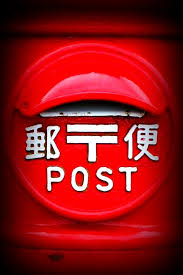
Japanese Post Office

Japanese Post Office


Japan Post Holdings Co. will list its shares in Tokyo in 2015, together with those of its banking and insurance arms in one of the biggest stock listings in the country. Maybe an opportunity to invest in Japan? Read:

http://www.japantimes.co.jp/news/2014/12/23/business/corporate-business/japan-post-holdings-financial-units-to-go-public-together-sources-say/?utm_source=digg#.VJk7WV4gOA


Direct Sales Entry Strategies in Japan

Japan Entry Strategies

Japan Entry Strategies


GBMC Article published by the EU-Japan Centre for Industrial Cooperation:

.
1) in EU-JAPAN NEWS, in the Decembre 2014 edition of the Centre’s Newsletter.
Article to be found page 15 of the Newsletter:
http://www.eu-japan.eu/sites/eu-japan.eu/files/december14.pdf

.
2) permanently online, on the “EU Business in Japan” website:
http://www.eubusinessinjapan.eu/library/publication/article-direct-sales-entry-strategies-in-japan

.


Why Invest in Japan?

Why Invest in Japan?

Why Invest in Japan?


In 2012, the EU-Japan Centre for Industrial Cooperation carried out a Survey of EU SMEs on their Internationalisation towards Japan (Source: In Search for Growth: Towards a New Role for SMEs in EU-Japan Relations, EU-JAPAN CENTRE FOR INDUSTRIAL COOPERATION 2013).

The obstacles most often mentioned by respondents (126 European SMEs) included: 1. Language barriers (55%), 2. Difficulty to grasp business practices, 3. Costs, 4. Difficulty in understanding the local laws or regulations, 5. Conforming to Japanese standards.

Knowing that exporters are conscious of the importance of cultural factors in doing business with Japan, this cultural gap can be problematic.

So why bother going to Japan, investing time and money in entering the Market?

There are many good reasons, some of them being strategic like:

1) “We feel that the quality of our products and the company as a whole have benefited a lot from our relationship with Japan” (Helioscreen NV in 1997)

2) “For any company engaged in product innovation, quality control and focused on creating brands with their own identity on a daily basis, the Japanese market is one of the most important in terms of business value and potential company growth” (Francesco Vespasiani, VUEFFE Srl, Italian leather footwear producer, in 2013).

3) Japan is a key Market and a gate to other Asian Markets: the enormous influence of its Retail Industry attracts global attention and is at the origin of many Asian trends.

Last but not least,

4) Japan is a great Retail Laboratory, where new B2C concepts are localized and developed.

There is a prevalent myth that it is a country with a monolithic culture and uniform tastes, but a walk in Shibuya, Harajuku or Shinjuku (distinct areas in Tokyo) will proof you the opposite and show you various lifestyle choices. In his book Japanese Consumer Behavior, John Mc Creery wonders: “Can we safely ignore the fact that , while all these generations have grown up in a place called Japan, each has come (or is coming) of age in a radically different world ?”.

Mc Creery also points out that:

– even the Japanese “salaryman” has different faces: his private self, his work self, his social self and his family self are all different, with distinct consumer preferences.

– Women, children and the elderly, often neglected in a generic image of Japan Inc, are also important customers and have their own lifestyle patterns.

Finally, in his analysis of key characteristics of Japanese consumer behavior, Renaud Pretet concludes in 2010 that: “there are still various segments with potential on the Japanese market, the most obvious one being that of senior consumers. Retailing in Japan requires a complex mix of humility and audacity in a mature market that seems to be evolving towards more conscious consumption. Some industries, such as luxury brands, will have to reinvent themselves in the next decade. More than ever, Japan remains a Retail Laboratory and interesting experiments are to be closely monitored.”

So why Invest in Japan?

1) A tremendous market:

– A huge and homogeneous market: an advertising campaign in a newspaper can reach up to 17 Millions of consumers with a strong buying power and with similar tastes

– A market where customers fully appreciate technological features of a product and are also ready to pay for it.

2) An Innovative market:

– Innovation is everywhere. Some SMEs are leaders in their field and, in some cases, own some unique technologies.

– Japanese companies are open to alliances with companies allowing them to broaden their portfolio or to tap into new foreign markets.

3) A door to the Asian market:

Japan being the first investor in China, it is also a business platform towards the rest of Asia, where the future growth lays.

4) A market full of opportunities:

– the 2008 crisis has brought new incentives and opportunities for investment, making entry strategies less complex and less expensive than in the past.

– the Reconstruction Process after the 2011 earthquake disaster has also triggered lots of incentives and tax breaks in the Tohoku Region, from which foreign investors can benefit.

For these reasons, there has never been a better time to enter this market!


Sources:

1) Get to know your client and adapt, Philippe Huysveld, Market Report (60 pages) for the EU-JAPAN CENTRE FOR INDUSTRIAL COOPERATION, October 2013. (Internet link: http://www.eubusinessinjapan.eu/library/publication/report-get-to-know-your-client-and-adapt)

2) Japan Entry Strategy, Philippe Huysveld, Market Report (60 pages) for the EU-JAPAN CENTRE FOR INDUSTRIAL COOPERATION, November 2013. (Internet link: http://www.eubusinessinjapan.eu/library/publication/report-japan-entry-strategy)


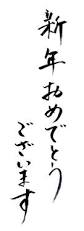
HAPPY NEW YEAR 2015 !!

新年明けましておめでとうございます。

新年明けましておめでとうございます。

BONNE ET HEUREUSE ANNEE 2015 !
.
We wish you a Happy New Year 2015 and we are looking forward to keeping in touch, working, engaging or exchanging with you again this year !
.
In 2015, please feel free to contact us, to join our Mailing List (your can subscribe for free on our website), as well as to follow us on our Blog (www.gbmc-blog.biz) or to check regularly our website (www.gbmc.biz) for updates.
.
Best Wishes,
.
The GBMC Team
EU-Japan Business Consultants
GBMC (Global Business & Management Consulting)
Paris area, France

Design a site like this with WordPress.com
Get started