
Interesting testimonial in EUROBIZ Japan about Japanese companies’ presence in Wales (UK).
Interview of Edwina Hart, Minister of Economy, Science and Transport for the government of Wales.
Read: http://eurobiz.jp/2014/12/welsh-touch/
Interesting testimonial in EUROBIZ Japan about Japanese companies’ presence in Wales (UK).
Interview of Edwina Hart, Minister of Economy, Science and Transport for the government of Wales.
Read: http://eurobiz.jp/2014/12/welsh-touch/

EU

Je suis Charlie

Japan
With our condolences to the families of the victims,
GBMC
Paris area, France.
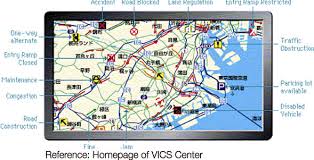
VICS Centre in Japan
.
From the start, companies in Japan have been pioneering new ITS (Intelligent Transportation Systems) Applications in a very dynamic domestic market. Always keen on possessing and using the latest electronics gadgets, Japanese automotive consumers have fueled the growth and the Innovation process in the Car Navigation and ETC (Electronic Toll Collection) Industries. So, today, how does the future of ITS in Japan look? What do you think?
.
As a starter, let us refer to the following MILT Presentation “ITS Initiatives in Japan”: ITSinitiativesinJapan
(MILT is the Japanese Ministry of Land, Infrastructure, Transport and Tourism)
Japanese Post Office
Japan Post Holdings Co. will list its shares in Tokyo in 2015, together with those of its banking and insurance arms in one of the biggest stock listings in the country. Maybe an opportunity to invest in Japan? Read:

Japan Entry Strategies
GBMC Article published by the EU-Japan Centre for Industrial Cooperation:
.
1) in EU-JAPAN NEWS, in the Decembre 2014 edition of the Centre’s Newsletter.
Article to be found page 15 of the Newsletter:
http://www.eu-japan.eu/sites/eu-japan.eu/files/december14.pdf
.
2) permanently online, on the “EU Business in Japan” website:
http://www.eubusinessinjapan.eu/library/publication/article-direct-sales-entry-strategies-in-japan
.
Why Invest in Japan?
In 2012, the EU-Japan Centre for Industrial Cooperation carried out a Survey of EU SMEs on their Internationalisation towards Japan (Source: In Search for Growth: Towards a New Role for SMEs in EU-Japan Relations, EU-JAPAN CENTRE FOR INDUSTRIAL COOPERATION 2013).
The obstacles most often mentioned by respondents (126 European SMEs) included: 1. Language barriers (55%), 2. Difficulty to grasp business practices, 3. Costs, 4. Difficulty in understanding the local laws or regulations, 5. Conforming to Japanese standards.
Knowing that exporters are conscious of the importance of cultural factors in doing business with Japan, this cultural gap can be problematic.
There are many good reasons, some of them being strategic like:
1) “We feel that the quality of our products and the company as a whole have benefited a lot from our relationship with Japan” (Helioscreen NV in 1997)
2) “For any company engaged in product innovation, quality control and focused on creating brands with their own identity on a daily basis, the Japanese market is one of the most important in terms of business value and potential company growth” (Francesco Vespasiani, VUEFFE Srl, Italian leather footwear producer, in 2013).
3) Japan is a key Market and a gate to other Asian Markets: the enormous influence of its Retail Industry attracts global attention and is at the origin of many Asian trends.
Last but not least,
4) Japan is a great Retail Laboratory, where new B2C concepts are localized and developed.
There is a prevalent myth that it is a country with a monolithic culture and uniform tastes, but a walk in Shibuya, Harajuku or Shinjuku (distinct areas in Tokyo) will proof you the opposite and show you various lifestyle choices. In his book Japanese Consumer Behavior, John Mc Creery wonders: “Can we safely ignore the fact that , while all these generations have grown up in a place called Japan, each has come (or is coming) of age in a radically different world ?”.
Mc Creery also points out that:
– even the Japanese “salaryman” has different faces: his private self, his work self, his social self and his family self are all different, with distinct consumer preferences.
– Women, children and the elderly, often neglected in a generic image of Japan Inc, are also important customers and have their own lifestyle patterns.
Finally, in his analysis of key characteristics of Japanese consumer behavior, Renaud Pretet concludes in 2010 that: “there are still various segments with potential on the Japanese market, the most obvious one being that of senior consumers. Retailing in Japan requires a complex mix of humility and audacity in a mature market that seems to be evolving towards more conscious consumption. Some industries, such as luxury brands, will have to reinvent themselves in the next decade. More than ever, Japan remains a Retail Laboratory and interesting experiments are to be closely monitored.”
1) A tremendous market:
– A huge and homogeneous market: an advertising campaign in a newspaper can reach up to 17 Millions of consumers with a strong buying power and with similar tastes
– A market where customers fully appreciate technological features of a product and are also ready to pay for it.
2) An Innovative market:
– Innovation is everywhere. Some SMEs are leaders in their field and, in some cases, own some unique technologies.
– Japanese companies are open to alliances with companies allowing them to broaden their portfolio or to tap into new foreign markets.
3) A door to the Asian market:
Japan being the first investor in China, it is also a business platform towards the rest of Asia, where the future growth lays.
4) A market full of opportunities:
– the 2008 crisis has brought new incentives and opportunities for investment, making entry strategies less complex and less expensive than in the past.
– the Reconstruction Process after the 2011 earthquake disaster has also triggered lots of incentives and tax breaks in the Tohoku Region, from which foreign investors can benefit.
For these reasons, there has never been a better time to enter this market!
Sources:
1) Get to know your client and adapt, Philippe Huysveld, Market Report (60 pages) for the EU-JAPAN CENTRE FOR INDUSTRIAL COOPERATION, October 2013. (Internet link: http://www.eubusinessinjapan.eu/library/publication/report-get-to-know-your-client-and-adapt)
2) Japan Entry Strategy, Philippe Huysveld, Market Report (60 pages) for the EU-JAPAN CENTRE FOR INDUSTRIAL COOPERATION, November 2013. (Internet link: http://www.eubusinessinjapan.eu/library/publication/report-japan-entry-strategy)

新年明けましておめでとうございます。

Merry Christmas and a Happy New Year !!

EU Japan Economic Forum
This report tracks the insights and discussions of Asia Matters’ 5th EU Asia Top Economist Round Table, the ‘EU Japan Economic Forum’ that took place in Tokyo on 14 November.
The event focused on three key topics impacting EU Japan economic relations:
– Assessing Abenomics: The Lasting Impact for the Japanese Economy
– Concluding the Japan EU EPA
– Challenges on the Path to 2015
– Focus on Foreign Direct Investment: Two way investment between Japan and the EU.
The fifth edition of the one-day C-summit style conference followed the success of previous TERTs in Dublin and Tokyo and featured top economists, key speakers from Nissan, Philips, BNP Paribas, as well as senior government officials from METI, MOFA, JETRO and the EU Delegation. Forum held in partnership with EBC, EU Japan Centre , EUSI, Keizai Doyukai and JETRO.
Source: Asia Matters:
http://issuu.com/asiamatters/docs/asia_matters__tokyo_tert_2014_repor/3?e=11981954/10496491

TH-135_©_Copyright_Airbus_Helicopters_Japan%20-%20Chikako_HIRANO
The TH-135 is a variant of Airbus Helicopters’ light twin-engine EC135 T2+ that has been customized for the JMSDF, and is meant to replace its single-engine training helicopter fleet. Deliveries of the TH-135 began in 2009 and have been in operation since 2011. Read more (Source: Aviation Today):
 www.gbmc-blog.biz