Author Archives: GBMC
About GBMC
GBMC (Global Business & Management Consulting):
Based in Paris area, we are a proactive Professional Service Provider and Consultancy specialized in the following three domains:
1) EU-Japan Business Consulting (Consultancy, Import-Export, Training & Translation).
2) General Business Consulting (Business Coaching, Technical Markets Consulting)
3) Management Consulting (Interim Management, Transition Management)
Please check www.gbmc.biz for details

“Europe Japan Industrial Relations 2015 – working together for a better future”
Hello everyone,
GBMC has just released a new publication, which we would like to submit to your attention. (Constructive) comments are welcome!
Please do not consider this as “spam”, as you do not have to buy anything (but, of course, you are welcome to) and as there is a free sample available (13 Interviews) for your reading!!!
More info from our website at:
“Europe Japan Industrial Relations 2015 – working together for a better future”
1 Comment | tags: "Europe Japan Industrial Relations 2015 - working together for a better future", aerospace industry, automotive industry, Electronics Industry, Electronics Industry in Japan, EU-Japan industry, Europe, European Industry, GBMC, industrial policies, Industrial relations, Industries in Japan, Industries in the EU, Japan, Japanese Industry, key EU industrial sectors, the future of industries | posted in Business, clever software, Cross-cultural, Energy, EU, Invest, Japan, Management, Social, software, Technology
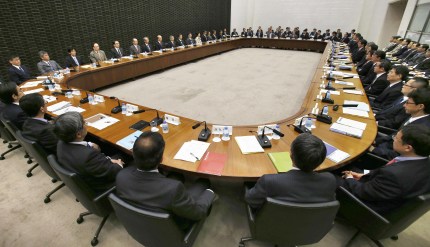
Business Meetings and Negotiations in Japan
GBMC is honoured and delighted to present you the following cross-cultural seminar:
Seminar F: Cross-cultural Business Awareness Training:
“Business Meetings and Negotiations in Japan”
More details (on Linked In) from:
Business Meetings and Negotiations in Japan
or from our website:
http://www.gbmc.biz/Japan_Training.html
http://www.gbmc.biz/Training_-_Registration.html
Leave a comment | tags: Business Meetings, cross-cultural management, doing business in Japan, doing business with Japan, Doing Business with the Japanese, GBMC, Japan, Japan Cross-cultural Management, Japan cross-cultural training, Japan training courses, Negotiations | posted in Business, Cross-cultural, Japan

Retail in Japan
“Japanese retail giant Seven & I Holdings Co., Ltd. said Friday its Ito-Yokado Co. supermarket chain will shut down 40 unprofitable stores, or about 20 percent of its stores, over the next few years.
It is expected to close several stores within its current business year ending in February 2016.
The plan comes after the operating profit for the retail group’s supermarket division in the year to last February plunged 34.8 percent from a year earlier amid a consumer tendency to prefer specialty stores such as the Uniqlo casual clothing chain over general supermarkets.” (The Japan Times)
Today’s Japanese consumers seem to prefer “specialty stores” over general supermarkets. This is one of the changes to the traditional Japanese Consumer Mindset. Which one do you prefer and why?
Read more from:
Leave a comment | tags: "specialty stores", B2C, B2C in Japan, B2C sales in Japan, GBMC, general supermarkets?, Ito-Yokado Co, Japan, Japanese consumers, Ltd, retail, Retail in Japan, Seven & I Holdings Co. | posted in Business, Japan

Microbiologist Satoshi Omura source- Kyodo/Japan Times)
“Japanese microbiologist Satoshi Omura on Monday shared this year’s Nobel Prize in medicine for his work on a therapy for debilitating diseases caused by parasitic worms.
The 80-year-old Omura, a professor emeritus of Tokyo’s Kitasato University, shared the honor with William C. Campbell of Drew University in New Jersey and Youyou Tu of the China Academy of Traditional Chinese Medicine.” (Japan Times)

Takaaki Kajita (KYODO/Japan Times)
“Japanese physicist Takaaki Kajita was announced as a joint winner of the 2015 Nobel Prize in physics Tuesday for his groundbreaking work in experiments showing metamorphosis of the particle world.
Kajita, of the University of Tokyo, shared the prize with Arthur B. McDonald of Queen’s University in Canada.
The Nobel committee said it honored the 56-year-old Kajita and McDonald, 72, “for the discovery of neutrino oscillations, which shows that neutrinos have mass.”
“The discovery has changed our understanding of the innermost workings of matter and can prove crucial to our view of the universe,” the body said.” (Japan Times)
Read more from:
Japanese microbiologist Satoshi Omura shares Nobel Prize for medicine
Japan’s Takaaki Kajita shares Nobel in physics
List of Japanese Nobel laureates (Wikipedia): List of Japanese Nobel laureates
Does this increasingly large amount of Nobel prizes in Science (Physics, Chemistry) tell something about Innovation or Research in Japan? What do you think?
Leave a comment | tags: GBMC, Innovation in Japan, Japan, Japanese Nobel prizes, List of Japanese Nobel laureates, medicine, neutrinos, particle physics, physics, Satoshi Omura, Science in Japan, Takaaki Kajita | posted in Business, Japan, Technology

Japanese Kotatsu (Wikipedia)
“IKEA celebrates a decade in Japan next year with various special events and promotions. Since opening its first store in Chiba in 2006, the iconic Swedish home–furnishings provider has expanded to eight locations across the country.
IKEA is transforming into a multi-channel retailer.
Our customers today are changing; and people are much more digital, as well as physical, in the way that they shop. They want to shop when they want and how they want. IKEA needs to change with that. So we are doing that. We are very much looking at how can we then be available; when somebody wants a sofa or a phone, they then start their shopping experience. It doesn’t literally mean going to visit a physical store.
The physical store will always be our competitive advantage. A 40,000-square-metre store, being a fun day out with a food offer and a store to wander around in — with furniture and accessories, and areas for the kids to play — will always attract people. But we want to be more than that. So we will have a new web platform — and e-commerce that we will introduce — to make it so you can shop once you see things on the web as well. And we need to become closer to our customers, so we’re going to try new formats — even smaller IKEA locations — to order [products], have them delivered and picked up closer to the customers.” (EUROBIZ Japan)
In order to succeed in Japan’s Retail, you have got to adapt, localise and develop your offer. Multi-channel strategies and new formats are often advisable. This is a good example. What do you think?
Read more from: IKEA and the Japanese Home Furniture Market
Leave a comment | tags: B2C, GBMC, home furniture in Japan, IKEA, IKEA Japan, Japan, Japan Retail, Japanese consumers, Japanese furniture, Japanese Home Furniture Market, Japanese kotatsu, retail stores in Japan | posted in Business, Japan
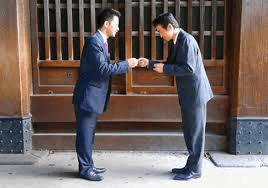
Doing Business with Japan
GBMC is honoured and delighted to present you hereunder the following cross-cultural seminar:
Seminar E: Cross-cultural Business Awareness Training:
“Doing Business with Japan” &
“How to pitch to Japanese prospects”
More details (on Linked In) from:
Doing Business with Japan
Or from our website:
http://www.gbmc.biz/Japan_Training.html
http://www.gbmc.biz/Training_-_Registration.html
Leave a comment | tags: cross-cultural management, doing business in Japan, doing business with Japan, Doing Business with the Japanese, GBMC, how to pitch to Japanese prospects, Japan Cross-cultural Management, Japan cross-cultural training, Japan pitching, meishi, pitching | posted in Business, Cross-cultural, Japan

Music streaming service in Japan
“Google has launched a music streaming service in Japan, becoming the latest tech giant to push into the world’s No. 2 music market, despite mixed results among earlier arrivals.
The U.S. company said that its Japanese edition of Google Play Music features more than 35 million tunes available at a cost of ¥980 ($8) a month.
The launch came after similar services debuted in Japan this year by Apple, popular messaging app Line, and a joint venture by IT firm CyberAgent and Japanese music giant Avex Group.
Japan is the world’s second-largest music market, estimated to be worth $2.6 billion in 2014, after the $4.8 billion U.S. market, according to the Recording Industry Association of Japan.
But packaged media such as CDs account for about 80 percent of Japanese music sales, contrasting sharply with the U.S. market where digital downloads are soaring.”
(Global) Key players in Music Streaming seem to be late in entering the huge Japanese Music Market. Packaged Media (CDs) are still predominant and far more popular than digital downloads in the “country of the walkman”, where the latest electronics gadgets and mobile phones have always been welcomed! Is Japan’s huge Music Market behind? And for how long? What do you think?
Read more from:
Is Japan’s huge Music Market behind?
Leave a comment | tags: CD sales in Japan, digital downloads in Japan, GBMC, Japan, Japan's Music Market, Japanese music sales, music streaming in Japan, packaged media in Japan, streaming service in Japan | posted in Business, clever software, Japan, software, Technology
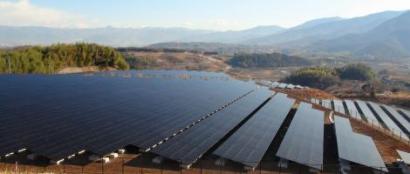
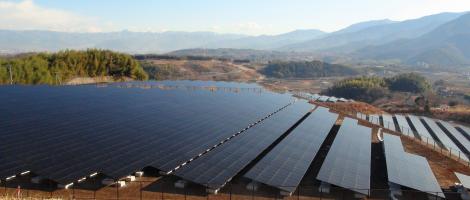
Mount_komekura_photovoltaic_power_plant (Wikipedia)
“News that 7-Eleven stores in the Kansai region will trade Kansai Electric Power Co.’s electricity in favor of cheaper electricity from Tokyo Electric Power Co. has locals wondering if Kepco’s six-decade monopoly over Kansai’s electricity supply might be ending.
From October, about 1,000 Seven-Eleven Japan Co. Ltd. stores in three Kansai prefectures will purchase their electricity from Tepco. The move comes just months after Kepco raised rates, and Seven-Eleven Japan, noting Tepco’s cheaper fees, made the move to switch utilities.
With deregulation in the smaller users electricity market set to begin next April, giving small businesses and residential customers a wider option of providers, Kepco seems particularly ill-placed to take advantage of the new competitive environment.” (The Japan Times)
It is great to see the positive aspects of the after-2011 period: lower energy consumption in Japan as a result of national saving awareness, wider introduction of renewable energies, enhanced price competition between the market players and utltimately the end of old monopolies! Time to reduce bonuses at Kepco? What do you think?
Read more from:
Japan: when the electricity market gets deregulated!
Leave a comment | tags: deregulation, electricity in Japan, electricity market, GBMC, Japan, Japanese utilities, Kepco, monopolies in Japan, Tepco | posted in Business, Energy, Japan, Technology

Siemens-7MW-Osterild (source – Clean Technica)
Siemens Looks Toward Next-Generation 10–20 MW Wind Turbines
“Siemens has for some time been known to have its sights on developing the next generation of wind turbines — a class of platforms rated to 10 MW and above. But as a new manufacturing plant takes shape, the company’s management has begun speaking more openly on activities geared towards those objectives.
Siemens recently signed off on a new German factory that will produce its flagship 7 MW offshore turbine. The new manufacturing plant is slated to begin production in mid-2017 and will be tasked with assembling generators, hubs, and nacelle backends together into complete nacelles — the working body of wind turbines to which blades are connected.” (Clean Technica)
The bigger the turbines, the bigger the environmental (noise) issues? What about integrating these giants in our landscapes? Maybe, using many smaller turbines instead might be more environment-friendly? What do you think?
Read more from: Wind Turbines Tech
Leave a comment | tags: electric power, GBMC, offshore turbines, Renewable Energy, Siemens, Siemens-7MW-Osterild (source - Clean Technica, wind energy, wind turbines | posted in Business, Energy, EU, Technology

A prepaid SIM card vending machine at Narita International Airport in Narita in Chiba Prefecture (Shoichi Otsu, Asahi Shimbun)
“NTT Communications Corp. has installed vending machines for prepaid SIM cards at Narita International Airport, offering an easy option for users to activate their mobile phones and other devices on arrival.
Users simply scan their passports to register identification information.
The machines operate around the clock. One is in the arrival lobby of Terminal 1 and the other is in the arrival lobby of Terminal 2.
NTT Communications installed the machines because of the continuing rise in foreign visitor arrivals.
Previously, SIM cards were only available at stores in the airport.” (The Asahi Shimbun)
In the country of convenience stores (“conbini” in Japanese) and of all kinds of vending machines, SIM cards can be bought now from vending machines: how more convenient can Japan be? What do you think?
Read more from:
SIM card vending machines: how more convenient can Japan be?
Leave a comment | tags: conbini, convenience, convenient, GBMC, Japan, Japanese convenience stores, mobile phones in Japan, NTT, SIM cards, vending machines | posted in Business, clever software, Japan, software, Technology








 www.gbmc-blog.biz