Author Archives: GBMC
About GBMC
GBMC (Global Business & Management Consulting):
Based in Paris area, we are a proactive Professional Service Provider and Consultancy specialized in the following three domains:
1) EU-Japan Business Consulting (Consultancy, Import-Export, Training & Translation).
2) General Business Consulting (Business Coaching, Technical Markets Consulting)
3) Management Consulting (Interim Management, Transition Management)
Please check www.gbmc.biz for details

Robots for farming and fishing (from The Yomiuri Shimbun)
“Research institutes and universities in Japan are developing robots to play an active part in the primary industries of agriculture and fisheries, which are suffering from aging workers and a lack of manpower. The robots are intended to alleviate the farmers’ workload and improve the quality of crops.
The Agriculture, Forestry and Fisheries Ministry actively supports the move with the idea of “making good use of Japan’s robotics technology, which has long been utilized mainly in factories, now in the field of agriculture.”
The central government set a goal in January to quadruple the size of the robot market to ¥2.4 trillion by 2020, and the primary industries are positioned as a crucial field in which to utilize the robots.
The average age of farmers in Japan was 66.7 in 2014, with 64 percent of them 65 or older. Under the circumstances, there is great interest in using robots to make up for a shortfall in agricultural manpower.” (The Yomiuri Shimbun)
These are all great applications for Robotics Technology whose future seems bright. The next challenge is commercialisation! What do you think?
Read more from:
Japan: Robots helping to reduce farmers’ and fishers’ workload!
Leave a comment | tags: farmers' and fishers' workload!, farming in Japan, Farming Robots, fishery in Japan, GBMC, Japan, milking robots, Robotics in Japan, robotics technology, robots | posted in Business, clever software, Japan, software, Technology

“Kokusaika” OR 2 types of “Omotenashi”
Japan firms face hurdles as ‘service’ culture taken overseas:
” …. At Uniqlo stores worldwide, staff greet every customer with “Welcome to Uniqlo!”
They briskly walk around on a clean, white sales floor, refolding and restacking clothes, rarely talking to customers or each other unless approached.
It’s a Japanese style of customer service based on a strict manual and which is praised for its politeness and efficiency. But as Japanese companies increasingly branch out overseas, they are faced with the dilemma of staying true to this retail philosophy while adapting to local service habits.
JETRO’s Nakajima said there are two types of omotenashi, or Japanese hospitality, seen in outgoing Japanese businesses.
One is to treat every single customer with thorough care, as seen in traditional Japanese ryokan hotels. The other is to provide quality homogeneous service in a quick and inexpensive way …..” (The Japan Times)
Our Point:
In their Internationalisation Process (or “Kokusaika” in Japanese), Japanese companies should probably think more of adapting the Japan Domestic “Omotenashi” (hopitality) practices abroad by taking into account the local culture specificities, rather than replicating it as it is. One feature to definitely carry over would be excellent dedicated service and full attention to the customer at any time, before/during and after the sales process. What do you think?
More to read from:
Does “Kokusaika” mean two types of “Omotenashi”?
By the way, WELCOME TO GBMC’s BLOG !!!!
Leave a comment | tags: "Kokusaika", ‘service’ culture, B2C, GBMC, internationalisation, Omotenashi, overseas, service, welcome | posted in Business, Cross-cultural, Japan

Haruno Yoshida (photo by Alfie Goodrich)
“Earlier this year, BT Japan president and representative director Haruno Yoshida made history, when she was appointed to the Keidanren, the Japan Business Federation. In accepting the nomination, Yoshida became the first woman ever named to the influential and conservative business lobby group.” (EUROBIZ Japan)
Read more from:
Historic (female) appointment at the “Keidanren” board !
Leave a comment | tags: change in Japan, female labour, GBMC, Haruno Yoshida, Japan, Japan Business Federation, Japanese female labour force, Keidanren | posted in Business, Japan, Management, Social
Japan: two-tiered labour market
“The problem is that women, though they are going to work, are mostly getting dead-end jobs. More than two-thirds of female labor force entrants, in fact, are climbing onto this slow track, meaning that they are destined to be second-class economic citizens for the rest of their working lives. Meanwhile, male entrants are given fast-track jobs at a much higher rate.
So the labor system is a sort of caste system, with a mostly female lower level and a mostly male upper strata. In some sense, this is progress, because women are no longer confined to the home, and now that they are in the workforce, women will undoubtedly demand better jobs.
But the sclerotic nature of this two-tiered labor market is a huge and continuing drag and it should be next on Abe’s hit list. Gender equality demands it, but so does the economic health of the nation, since the impossibility of advancing from the lower track to the upper track amounts to an enormous misallocation of talent and skill.” (Noath Smith, Bloomberg/Japan Times)
Read more from:
Japan: more women working in a two-tiered labour market!
Leave a comment | tags: abenomics, GBMC, gender equality in Japan, Japan, Japanese female labour force, Japanese labour market, Japanese labour policy, social aspects of Japan, two-tiered labour market!, women workingin | posted in Japan, Social

E-commerce in Japan
“A growing number of convenience stores are offering a service that allows online shoppers to pick up their purchases at the stores at their convenience.
The service allows customers to conveniently shop online whenever they like without having to wonder when they will be at home to take delivery of the item, which appeals to those who are frequently away from home, as well as those who prefer to not be bothered with accepting deliveries in person.
By offering the service, major convenience store chains have successfully attracted people who tend to frequently be away from home, such as those who live alone or married couples who both work, according to the three biggest convenience store chains in Japan: Seven-Eleven Japan Co., FamilyMart Co. and Lawson Inc. They add that the service appeals to women who are uncomfortable speaking with deliverymen at their front door …..
The benefits of in-store pickup services are not limited to the customers who use them — both convenience stores and couriers also benefit. For instance, by expanding their in-store pickup services, convenience stores can expect to see an increase in their customer base.
And couriers and transporters can increase distribution efficiency if they curtail their redeliveries by focusing on delivering to convenience store locations.
Redelivery due to absent recipients was necessary in 20 percent of about 4.1 million items surveyed in 2014 by Yamato Transport Co., Sagawa Express, and Japan Post Network Co.” (The Yomiuri Shimbun)
Read more from:
Japan E-commerce: More convenience stores offer pickup services for e-shoppers
Leave a comment | tags: B2C in Japan, B2C Marketing, B2C Marketing in Japan, B2C sales in Japan, combini, e-commerce, e-shoppers, FamilyMart, GBMC, Japan, Japanese convenience stores, Lawson, pickup services, Seven-Eleven Japan | posted in Business, clever software, Japan, Management

Kyushu picture (source – istartedsomething.com)
これぞ日本最高峰の絶景地!九州地方の人気おすすめ観光スポット17選
Go to the RETRIP website: Tourism in Kyushu (Japan)
Leave a comment | tags: GBMC, Japan, Kyushu, tourism in Japan, tourism in Kyushu, visit Japan, visit Kyushu | posted in Japan

JR Kyushu-luxury train (Picture: JR Kyushu)
Luxury ‘dream train’ designed over 100 years ago goes into service in Kyushu!
.
“Kyushu Railway Co. (JR Kyu-shu) has just launched the commercial operation of a luxury passenger train, a revival of a dream train created more than a century ago. The train, Aru Ressha, features a gold and black exterior with an arabesque design and a gorgeous interior comparable to that of a luxury hotel. Passengers are served a first-class sweets course that uses seasonal food from the region. The train was originally built by a U.S. company in 1908 following an order from the then predecessor of JR Kyushu, but did not go into service at the time as the Japanese company was nationalized.” (Japan Times)
.
Read more from:
Kyushu (south of Japan): the “train of dreams” is alive !!
Leave a comment | tags: GBMC, Japan, JR, JR Kyushu, Kyushu, luxury train, railways, train of dreams | posted in Business, Japan, Technology

Nikkei/FT: towards a EU-Japan FNA (Free News Agreement) ?
“Thursday’s surprise announcement by Nikkei Inc. that it’s buying the London-based FT Group, one of the world’s most respected and influential media groups, immediately raised questions about whether the Japanese company can successfully manage such a highly regarded news company. The Nikkei group, Japan’s most powerful financial media group, said it will buy the Financial Times publisher from Pearson PLC for about ¥160 billion ($1.3 billion) by procuring all outstanding stocks.” (Japan Times)
Yes, independance of the Press and, in particular, of the FT Editorial Team is a key concern.
However, on the bright side, in the context of the EU-Japan FTA negotiations, we hope that this high profile acquisition will enhance collaboration in the EU-Japan news/media sector and boost sharing of Industrial and Financial News/Information on both sides (EU and Japan). Business News sharing would definitely support Free Trade!!
The GBMC team
Read more from:
Nikkei/FT: towards a EU-Japan FNA (Free News Agreement) ?
Leave a comment | tags: EU, EU business in Japan, EU-Japan FNA, EU-Japan FTA, EU-Japan industry, EU-Japan relations, FNA, Free News Agreement?, FT, GBMC, Japan, Nikkei | posted in Business, EU, Invest, Japan, Management
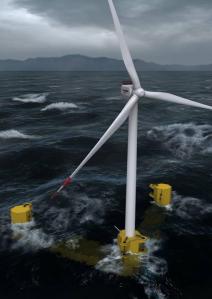
Mitsubishi floating concept
” The government said Friday that Japan will slash greenhouse gas emissions by 26 percent by 2030 from 2013 levels and will submit the plan to the United Nations as its contribution to a global summit on climate change in Paris in November. METI on Thursday said the government will plan to make nuclear energy account for 20 to 22 percent of Japan’s electricity mix in 2030, versus 30 percent before Fukushima. It set the target for renewable energy at 22 to 24 percent of the mix, liquefied natural gas at 27 percent and coal at 26 percent.” (Japan Times)
Read more from: Japan sets 26 percent cut in greenhouse gas emissions as 2030 target
Leave a comment | tags: 2030 target, climate change, COP21, GBMC, global summit on climate change in Paris, greenhouse gas emissions, Japan, METI, Renewable Energy in Japan, UN | posted in Business, Energy, Japan, Technology

Akihabara shops – Tokyo
GBMC Article published by the EU-Japan Centre for Industrial Cooperation:
.
1) in EU-JAPAN NEWS, in the June 2015 edition of the Centre’s Newsletter.
Article to be found page 34 of the Newsletter:
The Japanese Consumer Mindset
.
2) permanently online, on the “EU Business in Japan” website:
The Japanese Consumer Mindset
Leave a comment | tags: B2B in Japan, B2C in Japan, consumer electronics, Consumer goods business, Consumer mindset, doing business in Japan, GBMC, Japan, Japan Marketing, Japan Sales, Japanese consumer electronics, The Japanese Consumer Mindset | posted in Business, Japan










 www.gbmc-blog.biz