
Interesting testimonial in EUROBIZ Japan about Japanese companies’ presence in Wales (UK).
Interview of Edwina Hart, Minister of Economy, Science and Transport for the government of Wales.
Read: http://eurobiz.jp/2014/12/welsh-touch/
Interesting testimonial in EUROBIZ Japan about Japanese companies’ presence in Wales (UK).
Interview of Edwina Hart, Minister of Economy, Science and Transport for the government of Wales.
Read: http://eurobiz.jp/2014/12/welsh-touch/
Why Invest in Japan?
In 2012, the EU-Japan Centre for Industrial Cooperation carried out a Survey of EU SMEs on their Internationalisation towards Japan (Source: In Search for Growth: Towards a New Role for SMEs in EU-Japan Relations, EU-JAPAN CENTRE FOR INDUSTRIAL COOPERATION 2013).
The obstacles most often mentioned by respondents (126 European SMEs) included: 1. Language barriers (55%), 2. Difficulty to grasp business practices, 3. Costs, 4. Difficulty in understanding the local laws or regulations, 5. Conforming to Japanese standards.
Knowing that exporters are conscious of the importance of cultural factors in doing business with Japan, this cultural gap can be problematic.
There are many good reasons, some of them being strategic like:
1) “We feel that the quality of our products and the company as a whole have benefited a lot from our relationship with Japan” (Helioscreen NV in 1997)
2) “For any company engaged in product innovation, quality control and focused on creating brands with their own identity on a daily basis, the Japanese market is one of the most important in terms of business value and potential company growth” (Francesco Vespasiani, VUEFFE Srl, Italian leather footwear producer, in 2013).
3) Japan is a key Market and a gate to other Asian Markets: the enormous influence of its Retail Industry attracts global attention and is at the origin of many Asian trends.
Last but not least,
4) Japan is a great Retail Laboratory, where new B2C concepts are localized and developed.
There is a prevalent myth that it is a country with a monolithic culture and uniform tastes, but a walk in Shibuya, Harajuku or Shinjuku (distinct areas in Tokyo) will proof you the opposite and show you various lifestyle choices. In his book Japanese Consumer Behavior, John Mc Creery wonders: “Can we safely ignore the fact that , while all these generations have grown up in a place called Japan, each has come (or is coming) of age in a radically different world ?”.
Mc Creery also points out that:
– even the Japanese “salaryman” has different faces: his private self, his work self, his social self and his family self are all different, with distinct consumer preferences.
– Women, children and the elderly, often neglected in a generic image of Japan Inc, are also important customers and have their own lifestyle patterns.
Finally, in his analysis of key characteristics of Japanese consumer behavior, Renaud Pretet concludes in 2010 that: “there are still various segments with potential on the Japanese market, the most obvious one being that of senior consumers. Retailing in Japan requires a complex mix of humility and audacity in a mature market that seems to be evolving towards more conscious consumption. Some industries, such as luxury brands, will have to reinvent themselves in the next decade. More than ever, Japan remains a Retail Laboratory and interesting experiments are to be closely monitored.”
1) A tremendous market:
– A huge and homogeneous market: an advertising campaign in a newspaper can reach up to 17 Millions of consumers with a strong buying power and with similar tastes
– A market where customers fully appreciate technological features of a product and are also ready to pay for it.
2) An Innovative market:
– Innovation is everywhere. Some SMEs are leaders in their field and, in some cases, own some unique technologies.
– Japanese companies are open to alliances with companies allowing them to broaden their portfolio or to tap into new foreign markets.
3) A door to the Asian market:
Japan being the first investor in China, it is also a business platform towards the rest of Asia, where the future growth lays.
4) A market full of opportunities:
– the 2008 crisis has brought new incentives and opportunities for investment, making entry strategies less complex and less expensive than in the past.
– the Reconstruction Process after the 2011 earthquake disaster has also triggered lots of incentives and tax breaks in the Tohoku Region, from which foreign investors can benefit.
For these reasons, there has never been a better time to enter this market!
Sources:
1) Get to know your client and adapt, Philippe Huysveld, Market Report (60 pages) for the EU-JAPAN CENTRE FOR INDUSTRIAL COOPERATION, October 2013. (Internet link: http://www.eubusinessinjapan.eu/library/publication/report-get-to-know-your-client-and-adapt)
2) Japan Entry Strategy, Philippe Huysveld, Market Report (60 pages) for the EU-JAPAN CENTRE FOR INDUSTRIAL COOPERATION, November 2013. (Internet link: http://www.eubusinessinjapan.eu/library/publication/report-japan-entry-strategy)

Books about Japan
Useful Japan Bibliography List prepared by Richard Leclerc, Ph.D:
“Le Japon vu de l’étranger : Une bibliographie
海外から見た日本 : 参考文献”
Also add GBMC’s eBooks (available from our site at: http://www.gbmc.biz/GBMC_Publications.html):
1) “The Ultimate Survival Guide for Business in Japan”
2) “Lecture Economique de l’Histoire du Japon”
“
GBMC Article published by the EU-Japan Centre for Industrial Cooperation:
1) in EU-JAPAN NEWS, in the December 2013 edition of the Centre’s Newsletter. Article to be found page 18 of the Newsletter #44: EU-Japan News December 2013
2) permanently online, on the “EU Business in Japan” website: http://www.eubusinessinjapan.eu/library/publication/article-why-europe-and-japan-need-an-epa

How to set up an office in Japan
Après avoir mis en place l’export vers le Japon, les entreprises françaises peuvent avoir envie de s’implanter au Japon, d’être présentes au quotidien dans ce pays. Comment choisir le bon mode d’implantation au Japon ? Quelle structure juridique choisir ? Comment réussir son implantation au Japon ?
Le plan de la formation :
– Pourquoi s’implanter au Japon
– La stratégie d’implantation au Japon
– Les différentes options d’implantation au Japon
– Les différentes structures juridiques possibles au Japon
– Les clés de réussite de l’implantation au Japon
Tournage: LA TV DES ENTREPRENEURS (http://www.tvdesentrepreneurs.com)

How to export to Japan
Le Japon est un pays qui intéresse les entreprises françaises qui souhaitent développer leur marché et leurs exportations mais c’est également un marché bien particulier. Comment réussir à exporter vers le Japon ? Quelles sont les étapes de ce projet d’export et quelles sont les spécificités du marché japonais qui doivent être absolument respectées ?
Le plan de la formation :
– Le marché japonais
– Les spécificités culturelles du Japon
– Le profil type du consommateur japonais
– Les exportations françaises au Japon
– Les marchés à fort potentiel au Japon
– Adapter les produits français au marché japonais
– Améliorer les 4P du marketing au marché japonais
Tournage: LA TV DES ENTREPRENEURS (http://www.tvdesentrepreneurs.com)
http://www.gbmc.biz/Follow_us.php
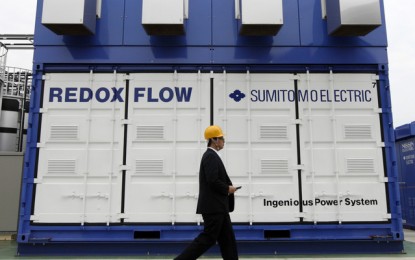
Renewable Energies in Japan
“RENEWABLE ENERGY” WEBINAR #14
Date: Tuesday, 20 May 2014
Time: from 10:30 to 11:30 (Brussels time)
What is the Japanese Renewable Energy Market Situation in 2013?
[Abstract]BEFORE the Fukushima accident in March 2011, Renewable Energies accounted for only 9% (mainly hydroelectricity for 8%) of the total 2010 electricity production in Japan, far behind major conventional sources like gas, nuclear and coal. From a world ranking perspective, Japan was #13 in Wind Energy, #3 in Solar Energy and # 8 in Geothermal Energy. In short, the government was concentrating on nuclear and solar power generation, providing little support for other types of alternative energy.
AFTER the accident, in 2012, all 54 nuclear reactors were put out of service for a short period of time. As Japan’s hydroelectric potential is nearly saturated, the Japanese government has been pushing since then other types of Renewable Energies (wind, solar, geothermal, marine). As a result, the whole Renewable Energy Industry is booming, as testified by the still increasing amount of investments made by major Japanese industrial conglomerates.
The webinar is targeted to EU Green Companies and Investors looking into approaching or entering this key growing Market.
What you will learn during this webinar?
In 30 minutes from your desk, discover:
Programme:
Speaker: Philippe HUYSVELD, Senior Consultant & CEO, GBMC (Global Business & Management Consulting)
(Link to expert’s profile at http://www.eubusinessinjapan.eu/support/huysveld-philippe)
Moderator:Jessica Michelson, MarCom, EU-JAPAN CENTRE for Industrial Cooperation
Organiser: EEN-Japan / EU-JAPAN CENTRE – EU-based Office (Brussels)
REGISTER !
Should you be interested in this event, feel free to register on:
http://www.eubusinessinjapan.eu/user/register

Japan-EU Consulting
Contact or schedule time for an appointment using vCita


“OMOTENASHI”: Get the Japanese Service Mindset !!
More details about this concept in the following Post from Mikitani-san (Rakuten):
Honda Aircraft announced that the FAA issued Type Inspection Authorization (TIA) for the HondaJet, a key milestone in the light jet’s certification program. Now that the jet’s GE Honda Aero HF120 engine is certified and the TIA issued, Honda Aircraft…

 www.gbmc-blog.biz