Tag Archives: Japan

Japan Entry Strategies + How to set up an office in Japan

Japan Entry Strategies + How to set up an office in Japan

Japan Entry Strategies + How to set up an office in Japan


GBMC is honoured and delighted to present you the following Japan business seminar:

Seminar H: “ Japan Entry Strategies and
How to set up an office in Japan”


More details (on Linked In) from:

Japan Entry Strategies and How to set up an office in Japan

or from our website:

http://www.gbmc.biz/Japan_Training.html

http://www.gbmc.biz/Training_-_Registration.html


How to Export to and Market your Products in Japan

How to Export to and Market your Products in Japan

How to Export to and Market your Products in Japan


GBMC is honoured and delighted to present you the following Japan business seminar:

Seminar G:
“ How to Export to and Market your Products in Japan”


More details (on Linked In) from:

How to Export to and Market your Products in Japan

or from our website:

http://www.gbmc.biz/Japan_Training.html

http://www.gbmc.biz/Training_-_Registration.html


Life Story: A Passion for Contemporary (Modular) Architecture in Japan


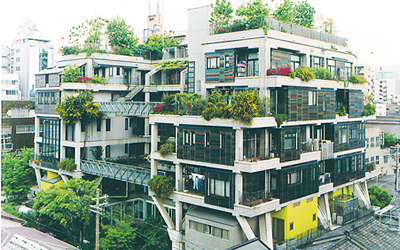
NEXT21 building in Osaka (Source - Osaka Gas)

NEXT21 building in Osaka (Source – Osaka Gas)


Today, we are delighted and honoured to share with you the following document (in French, English and Japanese), full of great building pictures in Japan, from Pr Jean Englebert, telling us about his Life Passion for Japanese Contemporary (Modular) Architecture:

A Style for the year 2001” or also “About Japan: How and why I discovered it“.

Please download the file from hereA Style for 2001 (Pr Jean Englebert)

Here is a long sample. Enjoy!


“Abstract

I have been drawn to Japan and its architecture since 1970.

I am convinced that 21st century architecture is yet to be

invented, both here and there.

The beginning of the adventure

I went to Japan for the first time in August 1970.

At the time, I was carrying out an extensive study on the

design and the making of a housing prototype that would be

manufactured industrially.

During the first two years of the study, I stumbled upon articles

saying that Japanese researchers were working toward

the same goal. I became curious and wanting to go there to

see the results of their research with my own eyes.

During the 1969 annual year’s end dinner organised by my

students, I was invited to say a few words. I challenged them

to set up a trip to Japan and use that opportunity to visit the

1970 Osaka World’s fair.

After some hesitations due to the fact that no other such long

trip had ever been imagined at the University, we came together

to start fund-raising the amount we needed and made up a plan

with the help of native Osamu Nozaki, a JETRO (Japan External

Trade Organization) senior staff member. And we made it!

In August 1970, forty of us flew out to Japan under a banner

that we gave and drew ourselves: le coq liégeois au pays du

soleil levant («the cock from Liège in the Land of the

Rising Sun»). We spent a month visiting Tokyo, Nagoy0a,

Kyoto, Himeji, Hiroshima and especially Osaka and the expo.

Encounters to remember

We were able to have astounding encounters with reknowned

architects such as Kisho Kurowaka and Kiyonori Kikutake, both

founding and active members of the Metabolist movement,

who gave us formative information about their research and

their creations.

In Tokyo, we were especially able to visit the Nakagin capsule

tower made by Kisho Kurowaka that had just been opened.

The 144 modular volumes connected to two concrete towers

containing elevators were used as hotel rooms for businessmen

who enjoyed state-of-the-art equipment: not only did

they have a full bathroom in thermoformed materials but also

the latest electronic devices: radio, recorders, typewriters,

TV as well as an oven and a refrigerator. Nothing was missing

so as to make sure that the «salary men» who couldn’t go

home at night were fully autonomous.

Much later, in 1991, Pr Jean Englebert founded the CEJUL (Centre for Japanese Studies at Liège University)!!!


Nakagin Capsule Tower (Source - Wikipedia)

Nakagin Capsule Tower (Source – Wikipedia)


****************************************************************************************************

About Jean ENGLEBERT (in short):

• Civil Engineer and Architect (1955, University of Liège).

• Engineer and town-planner (1958, University of Liège).

• Full-time Professor at the Applied Sciences Faculty (University of Liège),

Architectonic and Urbanistic Composition, 1966-1994

. Emeritus professor 1994

• Founder and director of the Research Centre for Architecture and Town-planning of the Liège University (CRAU), since 1967.

. Founder member in 1991 and President of CÉJUL (Centre for Japanese Studies at Liège University)

. Decorated of ” The Order of the Sacred Treasure, Gold Rays with Neck Ribbon” by  His Majesty the Emperor of Japan the Twenty – ninth of the Fourth Month of the Seventh Year of Heisei (1995 ).

. Appreciation Prize 1998 of the A.I.J. (Architectural Institute of Japan).


100% Renewable Energy by 2050 for the “Island of Beauty” (Corsica)?

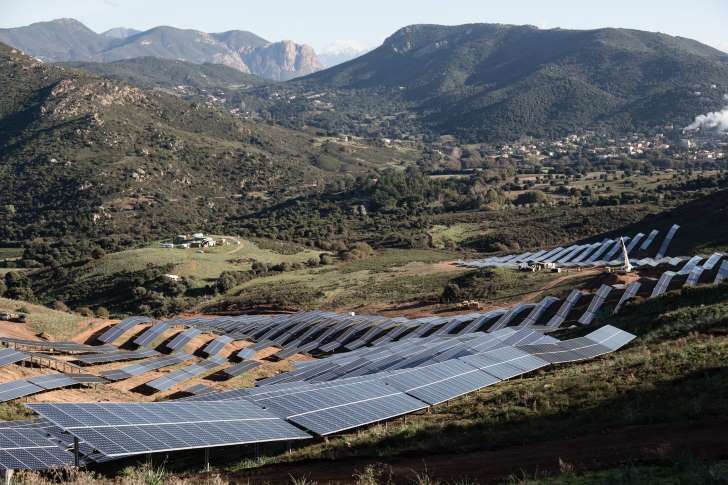
© Arnaud Février The Alata Plant is located about 20 km from Ajaccio.

© Arnaud Février The Alata Plant is located about 20 km from Ajaccio.


Partial Translation of the “Le Figaro/MSN post”:

“New installation in Corsica from COFELY Ineo (part of the GDF Suez Group) about 20 km from Ajaccio: the “Alata Solar Smart Grid”. This 4.4 MWc PV plant will be runned by the “Corsica Sole” operator. The major characteristic of this 15 million Euros investment/installation is  its «Smart Energy Storage & Management Solution”. The electricity produced at Alata will feed over 1000 homes in Corsica, where renewable energies already count for over 30% of the total energy production. The island targets 100% energy independance by 2050.

This storage system will compensate for the non-continuous aspect of solar energy: batteries located near the plant allow to keep/store electricity and to inject it into the grid whenever needed. Depending on the weather and the time of the day, the operator will be able to choose between using the electricity at once or storing it for a later consumption.”


So, can “Smart (Renewable) Energy Storage & Management Solutions” be the key to 100% energy independance of all islands in the world (including Japan)? What do you think?


More details from:

100% Renewable Energy by 2050 for the “Island of Beauty” (Corsica)?


NEW PUBLICATION: “Europe Japan Industrial Relations 2015 – working together for a better future”

"Europe Japan Industrial Relations 2015 - working together for a better future"

“Europe Japan Industrial Relations 2015 – working together for a better future”


Hello everyone,

GBMC has just released a new publication, which we would like to submit to your attention.  (Constructive) comments are welcome!

Please do not consider this as “spam”, as you do not have to buy anything (but, of course, you are welcome to)  and as there is a free sample available (13 Interviews) for your reading!!!

More info from our website at:

“Europe Japan Industrial Relations 2015 – working together for a better future”


Business Meetings and Negotiations in Japan

Business Meetings and Negotiations in Japan

Business Meetings and Negotiations in Japan


GBMC is honoured and delighted to present you the following cross-cultural seminar:

Seminar F: Cross-cultural Business Awareness Training:
“Business Meetings and Negotiations in Japan”


More details (on Linked In) from:

Business Meetings and Negotiations in Japan

or from our website:

http://www.gbmc.biz/Japan_Training.html

http://www.gbmc.biz/Training_-_Registration.html


Retail in Japan : “specialty stores” vs general supermarkets?

Retail in Japan

Retail in Japan

“Japanese retail giant Seven & I Holdings Co., Ltd. said Friday its Ito-Yokado Co. supermarket chain will shut down 40 unprofitable stores, or about 20 percent of its stores, over the next few years.

It is expected to close several stores within its current business year ending in February 2016.

The plan comes after the operating profit for the retail group’s supermarket division in the year to last February plunged 34.8 percent from a year earlier amid a consumer tendency to prefer specialty stores such as the Uniqlo casual clothing chain over general supermarkets.” (The Japan Times)

Today’s Japanese consumers seem to prefer “specialty stores” over general supermarkets. This is one of the changes to the traditional Japanese Consumer Mindset. Which one do you prefer and why?

Read more from:

  1. Retail in Japan : “specialty stores” vs general supermarkets?
  2. one of our previous posts: The Japanese Consumer Mindset


More Nobel Prizes for Japan!

Microbiologist Satoshi Omura (source- Kyodo/Japan Times)

Microbiologist Satoshi Omura source- Kyodo/Japan Times)

“Japanese microbiologist Satoshi Omura on Monday shared this year’s Nobel Prize in medicine for his work on a therapy for debilitating diseases caused by parasitic worms.

The 80-year-old Omura, a professor emeritus of Tokyo’s Kitasato University, shared the honor with William C. Campbell of Drew University in New Jersey and Youyou Tu of the China Academy of Traditional Chinese Medicine.” (Japan Times)


Takaaki Kajita (KYODO/Japan Times)

Takaaki Kajita (KYODO/Japan Times)

“Japanese physicist Takaaki Kajita was announced as a joint winner of the 2015 Nobel Prize in physics Tuesday for his groundbreaking work in experiments showing metamorphosis of the particle world.

Kajita, of the University of Tokyo, shared the prize with Arthur B. McDonald of Queen’s University in Canada.

The Nobel committee said it honored the 56-year-old Kajita and McDonald, 72, “for the discovery of neutrino oscillations, which shows that neutrinos have mass.”

“The discovery has changed our understanding of the innermost workings of matter and can prove crucial to our view of the universe,” the body said.” (Japan Times)

Read more from:

Japanese microbiologist Satoshi Omura shares Nobel Prize for medicine

Japan’s Takaaki Kajita shares Nobel in physics

List of Japanese Nobel laureates (Wikipedia): List of Japanese Nobel laureates


Does this increasingly  large amount of Nobel prizes in Science (Physics, Chemistry) tell something about Innovation or Research in Japan? What do you think?


Success Story: how IKEA adapts to the Japanese Home Furniture Market

Japanese Kotatsu (Wikipedia)

Japanese Kotatsu (Wikipedia)


“IKEA celebrates a decade in Japan next year with various special events and promotions. Since opening its first store in Chiba in 2006, the iconic Swedish home–furnishings provider has expanded to eight locations across the country.

IKEA is transforming into a multi-channel retailer

Our customers today are changing; and people are much more digital, as well as physical, in the way that they shop. They want to shop when they want and how they want. IKEA needs to change with that. So we are doing that. We are very much looking at how can we then be available; when somebody wants a sofa or a phone, they then start their shopping experience. It doesn’t literally mean going to visit a physical store.

The physical store will always be our competitive advantage. A 40,000-square-metre store, being a fun day out with a food offer and a store to wander around in — with furniture and accessories, and areas for the kids to play — will always attract people. But we want to be more than that. So we will have a new web platform — and e-commerce that we will introduce — to make it so you can shop once you see things on the web as well. And we need to become closer to our customers, so we’re going to try new formats — even smaller IKEA locations — to order [products], have them delivered and picked up closer to the customers.”  (EUROBIZ  Japan)

In order to succeed in Japan’s Retail, you have got to adapt, localise and develop your offer. Multi-channel strategies and new formats are often advisable. This is a good example.  What do you think?


Read more fromIKEA and the Japanese Home Furniture Market


Is Japan’s huge Music Market behind?

Music streaming service in Japan

Music streaming service in Japan


“Google has launched a music streaming service in Japan, becoming the latest tech giant to push into the world’s No. 2 music market, despite mixed results among earlier arrivals.

The U.S. company said that its Japanese edition of Google Play Music features more than 35 million tunes available at a cost of ¥980 ($8) a month.

The launch came after similar services debuted in Japan this year by Apple, popular messaging app Line, and a joint venture by IT firm CyberAgent and Japanese music giant Avex Group.

Japan is the world’s second-largest music market, estimated to be worth $2.6 billion in 2014, after the $4.8 billion U.S. market, according to the Recording Industry Association of Japan.

But packaged media such as CDs account for about 80 percent of Japanese music sales, contrasting sharply with the U.S. market where digital downloads are soaring.”


(Global) Key players in Music Streaming seem to be late in entering the huge Japanese Music Market. Packaged Media (CDs) are still predominant and far more popular than digital downloads in the “country of the walkman”, where the latest electronics gadgets and mobile phones have always been welcomed!  Is Japan’s huge Music Market behind? And for how long? What do you think?


Read more from:

Is Japan’s huge Music Market behind?


Design a site like this with WordPress.com
Get started