

shopping in Japan
At least, in order to increase shopping revenues from foreigners/tourists (outside the big cities), the Japanese government seems to be working at it! Read more from:

shopping in Japan
At least, in order to increase shopping revenues from foreigners/tourists (outside the big cities), the Japanese government seems to be working at it! Read more from:
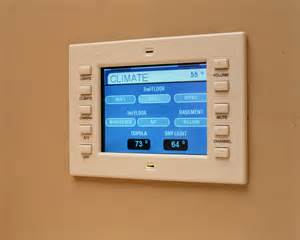
Smart Homes
Check out the following Video:
“Toshiba, Honda and Sekisui House Bring the Future to the Present with a Real-World Smart Home”
The three companies created together a newly-built, fully livable, two-household model home that envisions a lifetime of comfort and sustainability, and embodies the goal of a zero carbon emission lifestyle by the year 2020. This model home is being used to test and verify technologies for future lifestyles by putting them into practical use.
https://www.youtube.com/watch?v=UjO5SkHGYHQ&spfreload=10
(Source: Business Insider, MSN)

The Rise of Machines ???
Check out from:
http://www.msn.com/en-gb/money/technology/14-surprising-jobs-that-robots-are-doing/ss-BBjIbyC

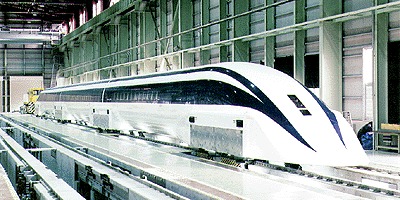
JR-MAGLEV Series_L0 (Wikipedia)
MAGLEV (Magnetic Levitation) Train Applications are being developped, tested and slowly implemented in China and in Japan. What about one day a MAGLEV service speeding at an average speed of 500 km/h and linking Paris – Brussels – Berlin – Warsaw – Moscow – Pekin – Osaka – Tokyo in one day, competing with airplanes?
Find out more in this paper (in French) of Pr Jean Englebert:
Article -Maglev Jean Englebert 2007
*****************************************************************************
About Jean ENGLEBERT (in short):
• Civil Engineer and Architect (1955, University of Liège).
• Engineer and town-planner (1958, University of Liège).
• Full-time Professor at the Applied Sciences Faculty (University of Liège),
Architectonic and Urbanistic Composition, 1966-1994
. Emeritus professor 1994
• Founder and director of the Research Centre for Architecture and Town-planning
of the Liège University (CRAU), since 1967.
. Founder member in 1991 and President of CÉJUL (Centre for Japanese Studies at Liège University)
. Decorated of ” The Order of the Sacred Treasure, Gold Rays with Neck Ribbon,”
by His Majesty the Emperor of Japan the Twenty – ninth of the Fourth Month of the Seventh Year of Heisei (1995 ).
. Appreciation Prize 1998 of the A.I.J. (Architectural Institute of Japan).
![Par Joy (This week's Boston Organics delivery) [CC BY 2.0 (http://creativecommons.org/licenses/by/2.0)], via Wikimedia Commons](https://gbmc-blog.biz/wp-content/uploads/2015/05/organic_foods-par-joy-this-weeks-boston-organics-delivery.jpg)
Organic Food –
Par Joy (This week’s Boston Organics delivery) [CC BY 2.0 (http://creativecommons.org/licenses/by/2.0)%5D, via Wikimedia Commons)
Interesting feedback about organic food in Japan from EUROBIZ Japan.
There will definitely be business opportunities in the long-term!
Read more from: http://eurobiz.jp/2015/05/slow-growth/
Stretching over more than 3000 km Japan is served by an extensive domestic air network. In this article the discount air ticket system for foreign travellers is explained. Unlike for the Asian traveller who can easily fly directly to the islands of Okinawa, Kobe, Nagoya, Fukuoka, Osaka and other big cities, the travellers from America, Europe and Africa arrive almost always in Tokyo (Narita or Haneda).
 Passing by Mt. Fuji leaving Narita Airport
Although Japan has one of the best train networks in the world if you are on a tight schedule and connecting to a place more remote from Tokyo then a domestic flight is your best option. Indeed, for foreign visitors the domestic airfares are more favourably priced compared with the cost of the Shinkansen (high speed) trains. This is mainly because there are a variety of special discounts available for foreign travellers that makes flying in Japan great…
View original post 695 more words
Fujisawa green town (© Getty)
Japan is investing in a greener future, and electronics giant Panasonic is leading the way with its ‘smart town’, called Fujisawa.
The environmentally-friendly town was launched at the tail end of last year and, since then, the houses have been occupied with residents who are all keen to do their bit for the environment.
Fujisawa’s price tag is around £320 million. The town will have 1,000 solar-powered homes, along with electric cars and bikes that can be used by the community.
Around 3,000 residents are expected to move in by 2018. Alongside being eco-friendly, the project has also been carefully engineered to protect it against natural disasters.
Read more from:
http://www.msn.com/en-gb/news/gul/japan-to-build-green-town/ar-BBjLLot

Belgium (source: Wikimedia commons)

Japan
Tokyo – On May 12, addressing and presiding over the Seminar on investment opportunities in Belgium, Prime Minister Charles Michel and Deputy Prime Minister Kris Peeters, highlighted the recent measures taken by the Federal Government of Belgium to support the business and investment climate and strengthen Belgium’s attractiveness as a gateway to Europe.
One of the key notes at the seminar was the presentation of BELGIUM AND ITS NEIGHBOURS’ BUSINESS CLIMATES COMPARED 2015 edition, a comparison of business climates in Belgium and other European countries, which was delivered by Mr Masatomo Nomura, Chair of the BJA Investment Committee.
This study of studies looks at the four areas:
As the pages on global attractiveness show, there is a rather big gap between the perception of Belgium and reality. In other words, the recognition of ‘Belgium’ as a brand is low, but in reality the Belgian economy is highly globalised and investors discover pleasant surprises afterwards.
The pages on headquarters and holding companies show that Brussels is one of the leading cities in Europe for business. Not only because of its central location in Europe, but also because of its internationally open business culture and the ease of doing business, reasonable level of office rent and an investor-friendly tax regime, Belgium is a highly regarded location.
When it comes to logistics, Belgium ranks number 1 in Europe because of the strong combination of excellent infrastructure, accessibility and superb cost efficiency for distribution.
Concerning research and development, Belgium is in the top five countries in the world for the quality of scientific research institutions. The quality of mathematics and science education is among the top 3 in the world. University-industry collaboration is very active, which shows potential to bring the results of research to the market.
Download the report from our Blog: Belgium and its neighbours business climates compared 2015 (BJA)
More details from the BJA at: BJA News Flash – 2015 BJA Investment Publication
HondaJet makes maiden flight from Sendai to Tokyo !!!
Honda Motor Co.’s first jet plane made its maiden flight Thursday 23/04/2015 !!!
The seven-seat aircraft took off from Sendai and landed at Tokyo’s Haneda airport Thursday afternoon.
The company is in line to obtain final approval for the plane from the U.S. Federal Aviation Administration and plans to start deliveries to U.S. customers later this year.
Read more from:
The European Business Aviation Convention and Exhibition (EBACE), May 19–21, 2015, in Geneva, Switzerland, is Europe’s premier business aviation gathering. This year, a production HondaJet will be showcased for the first time in Europe!!!
“Visit our exhibit to experience the best-in-class performance, comfort and efficiency that make the HondaJet unique. We look forward to seeing you at Booth Z140 and at the Static Display” (Honda Aircraft)
More details from
View original post 2 more words
Japanese MAGLEV (Magnetic Levitation) Trains
Why MAGLEV?
Magnetically levitated (MAGLEV) trains are considered as a future application of HTS development. To understand why, we must look briefly at the history of the railroads. The development of trains and rails began in the early 1800s. The modern conventional train is no faster (~110 mph) than those of the late 1890s. So conventional trains have reached the end phase of their development.
France, Germany, and Japan have developed “high-speed” or “bullet” trains capable of speeds of 150-180 mph. This improvement in speed is based upon improved rails and controls. However, this technology has also reached the end phase of its development. One limiting factor for these trains is the expensive and time-consuming maintenance of the rails. So it is the mechanical friction between train wheels and metal tracks that limit this technology. This leads us to the development of the magnetically levitated (no friction) trains.
Read more from: http://www.lanl.gov/orgs/mpa/stc/train.shtml
.
The Chuo Shikansen MAGLEV Project from JR Tokai – JR Central
While its fastest bullet trains can cut the transit time from Tokyo to Osaka from about 6 hours by car to about 2 hours and 20 minutes by bullet train, JR Tokai is dreaming of a next generation maglev system that could go even faster, completing the 500+ kilometer (310+ mile) journey in under an hour.
The Chuo Shinkansen Maglev, a $90B USD Project: a superconducting magnetically levitated (SCMaglev) train design (a type of electrodynamic suspension Maglev), which travels along a U-shaped track at speeds of up 505 km/hr (311 mph).
Read more from:
http://www.dailytech.com/Japanese+Maglev+Train+Begins+Full+Speed+Testing+at+310+mph/article33281.htm
.
Want to see what it feels like in such a train (at 500 km/h)?
Check the following demo video:
https://www.youtube.com/watch?v=DDmH7dfpl0Y


 www.gbmc-blog.biz