Author Archives: GBMC

About GBMC

Unknown's avatar
GBMC (Global Business & Management Consulting): Based in Paris area, we are a proactive Professional Service Provider and Consultancy specialized in the following three domains: 1) EU-Japan Business Consulting (Consultancy, Import-Export, Training & Translation). 2) General Business Consulting (Business Coaching, Technical Markets Consulting) 3) Management Consulting (Interim Management, Transition Management) Please check www.gbmc.biz for details

EU-Japanese Teams (2) shortlisted for UK Railways Projects !!!

JTREC trains (Source - JTREC website)

JTREC trains (Source – JTREC website)


  1. Dutch-Japanese team shortlisted to compete for West Midlands (UK) Franchise:

The U.K. Department for Transport (DfT) announced on 7 April 2016 that three bidders have been shortlisted for the West Midlands passenger franchise, including West Midlands Trains Ltd, a subsidiary of the Abellio Transport Holding (Dutch national passenger rail operator (NS) Group), with JR East and Mitsui & Co. as minority partners. The new operator will take over the franchise in October 2017, with the contract award expected to be made in June 2017.

The DfT also announced that the consortium of JR East and Mitsui & Co. has been awarded a new Pre-Qualification Questionnaire Passport, which enables the consortium to express interest in franchises for the next four years, in an easier and less cumbersome way.”  (Source: JR East Newsletter #20)

For further information, please check:  https://www.gov.uk/government/news/three-train-companies-shortlisted-to-compete-for-west-midlands-franchise


2. Franco-Japanese team shortlisted for new trains in Liverpool (UK):


“Merseytravel, an executive body that provides professional, strategic and operational transport advice to the Liverpool City Region Combined Authority, announced on 11 January 2016 that five bidders including a team composed of  French and Japanese companies have been shortlisted for a contract to supply around 50 EMUs (Electric Multiple Units) for the Merseyrail network.

The Franco-Japanese team is composed of Mitsui, a major Japanese trading company, J-TREC, JR East’s subsidiary rolling stock manufacturing company, and France’s Alstom.

Bids are due to be submitted by the end of April and a preferred bidder will be identified towards the end of the year. The project is likely to cost around £400m.

This joint action between French and Japanese companies is the first of its kind in the European Union, and concrete business results are expected.”     (Source: JR East Newsletter #19)

For more information about J-TREC, please click:  http://www.j-trec.co.jp/eng/index.html

The official announcement by Merseytravel can be accessed from:  http://www.merseytravel.gov.uk/about-us/media-centre/news/Pages/Another-step-towards-new-Merseyrail-trains-as-bidder-shortlist-announced.aspx


Congratulations! Great to see EU-Japan Industrial Cooperation and breakthroughs in the highly sensitive Railways Sector !!!  What do you think?


GBMC speaking at the MEDEF Executive Club Conference! Join us!


Doing Business with Japan

Doing Business with Japan

Comment réussir votre développement international au Japon”


organised in Paris by the MEDEF Ile-de-France (French Federation of Companies) on wednesday May 11, 2016.


More details about the Conference itself (in French):

Eric BERGER, Président du MEDEF Ile-de-France, et Michel JONQUERES, Président de la Commission Internationale,

ont le plaisir de vous convier au Petit Déjeuner de l’Executive Club du MEDEF Ile-de-France sur le thème :

« Comment réussir votre développement international au Japon »

le mercredi 11 mai 2016 de 8h30 à 10h30

au Club (niveau -1)

10, rue du Débarcadère – Paris 17ème

avec la participation de :

Yoichi SUZUKI, Ambassadeur du Japon en France

« Le commerce franco-japonais »

Philippe HUYSVELD, spécialiste du Japon, membre de Global Business and Management Consulting (GBMC)

« A faire et à ne pas faire pour votre réussite commerciale au Japon »

Jean-Charles CROUIN, Conseiller du Commerce Extérieur de la France (section Japon), Président de la Commission Asie du

CNCCEF

« Un entrepreneur français au Japon »


If you are interested in joining us for the conference, please fill in and send back the form hereunder:


COUPON-REPONSE

Merci de confirmer votre présence en nous renvoyant le coupon-réponse par courrier, accompagné de

votre chèque de règlement à l’ordre du MEDEF Ile-de-France avant le vendredi 6 mai 2016 à l’adresse :

MEDEF Ile-de-France – Service Communication – 251, boulevard Pereire – 75852 PARIS Cedex 17

Mme/M. : ……………………………………………………… Société : ………………………………………………..……….……

Fonction :……………………………………………………… Tél. : ……………………E-mail : ……………………………….…..

Ο   Assistera au petit déjeuner 

Ο   N’assistera pas au petit déjeuner

PARTICIPATION : 30 € TTC

(votre inscription sera prise en compte uniquement après règlement)

Pour toute information : service Presse et Communication au : 01 40 55 12 43 / 51 ou secretariat@medef-idf.fr


Japan’s Electricity Market deregulated: the end of an era?

Electricity Market in Japan

Electricity Market in Japan


“Japan’s power utilities have lost their monopoly over electricity on Friday April 1st in an unprecedented shakeup that could give a much needed jolt to Japan’s long stagnant economy.

Already, a price war has broken out among many of the more than 260 companies that will be allowed to sell electricity in Japan’s $70 billion retail market. From April 1, Japanese consumers will be able to buy electricity from suppliers ranging from telecoms conglomerate Softbankand trading firm Marubeni to travel agency H.I.S. and a Hokkaido-based supermarket co-operative that has branched out into solar parks.

They and others like Japan’s biggest city gas operator, Tokyo Gas are packaging other services, offering loyalty programs and advertising them.

The new entrants are betting they can make money in a low-margin business by undercutting the monopolies brought low financially by the Fukushima disaster and saddled with a high-cost business model after decades of guaranteed profits.

The government is hoping increased competition in the final remaining restricted part of the electricity market will boost efficiency and innovation and cut prices that are among the highest in the world.

But the new entrants are competing for space in a market in long-term decline as the population falls and consumers from factories to households look to trim power use.

What is more likely to happen is regional monopolies would merge and relatively few of the newcomers would survive the coming battle for market share.”  (Reuters)


The page has been turned: this is definitely good news for Japanese consumers and this should also work in favour of further deployment of Renewable Energies in Japan! What do you think?

Read more fromJapan Electricity deregulated: the end of an era?


E-Fan: AIRBUS group’s Electric Plane crossed the Channel in 2015!

AIRBUS E-Fan4

AIRBUS E-Fan4

” The potential of electric aviation

At 11am, 10 July 2015, on a calm, sunny summer morning, the Airbus E-Fan touched down in Calais to enter its name in the record books.

The all-electric plane became the first twin-engine electric plane taking off with its own power to negotiate the English Channel, more than 100 years after Louis Blériot first made the intrepid journey.

E-Fan’s first flight above the sea

Travelling in the opposite direction to the pioneering Frenchman and powered by lithium-ion batteries, the E-Fan took off from Lydd on the English south coast, completing the 74 kilometre flight east to Calais, France, in around 37 minutes. Flown by test pilot Didier Esteyne, the all-electric plane weighs around 600 kilogrammes and travelled at an altitude of about 1,000 metres [3,500 feet].

E-Fan’s initial production targets

Airbus Group will invest in, and construct, the E-Fan’s Pau assembly site, which will be leased to its wholly owned Voltair subsidiary responsible for the electric aircraft’s development, production, sales, delivery and customer support. 

Construction is expected to begin in 2016, with the facility ready to initiate E-Fan 2.0 series production the following year, enabling the aircraft’s commercialisation in late 2017. The initial E-Fan production rate is targeted at approximately 10 aircraft annually, with the capability to grow based on market response.”   (AIRBUS Group website)


Looking forward to new records, challenges and innovation results! 

Will Paris – Tokyo by E-Fan be possible one day?


Check the Videos from:

http://www.airbusgroup.com/int/en/innovation-citizenship/airbus-e-fan-the-future-of-electric-aircraft/Cross-channel-flight.html

http://www.leparisien.fr/high-tech/e-fan-l-avion-electrique-d-airbus-a-traverse-la-manche-10-07-2015-4934155.php


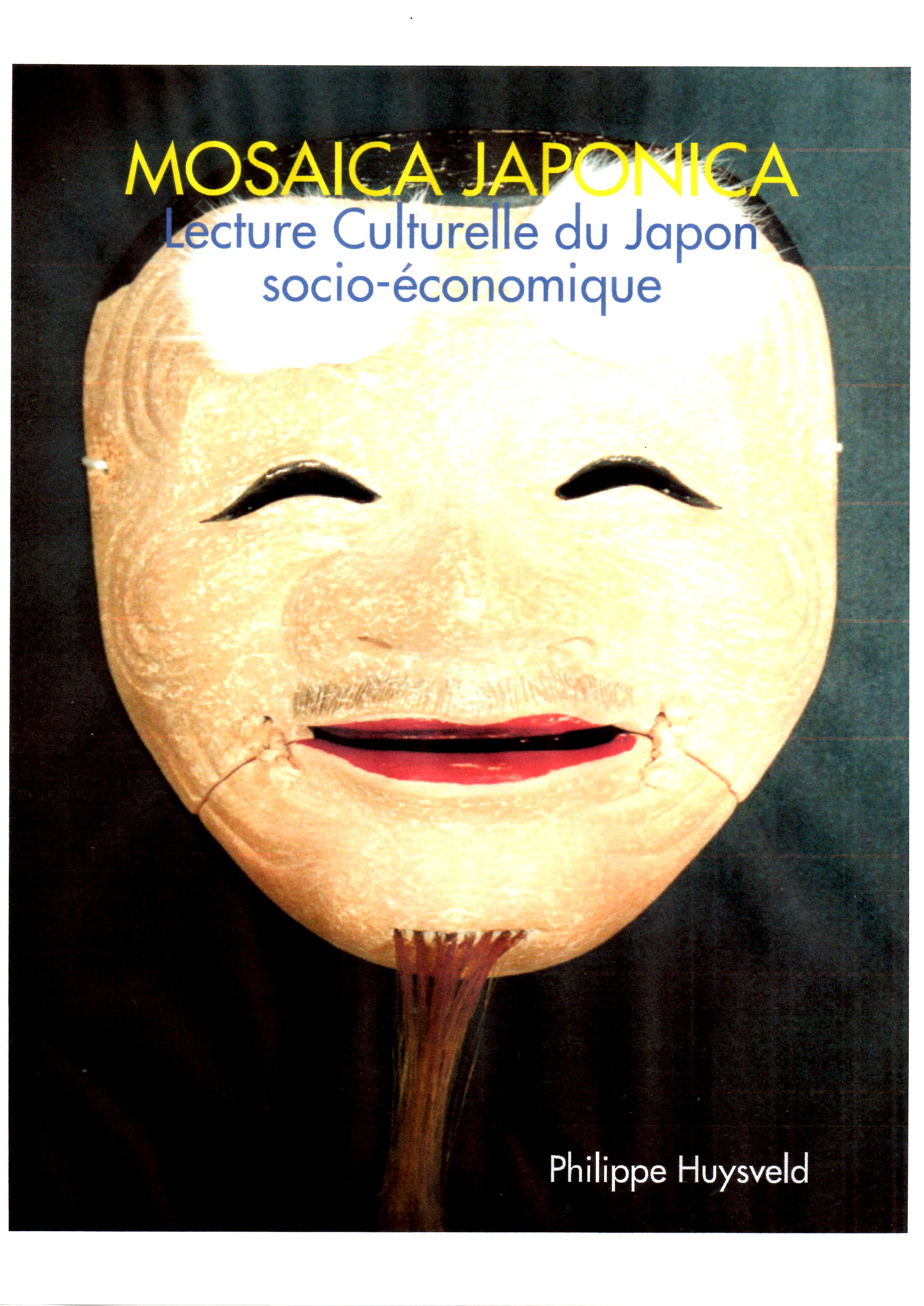
eBook – MOSAICA JAPONICA – Lecture Culturelle du Japon socio-économique

MOSAICA JAPONICA - Ph Huysveld - cover

MOSAICA JAPONICA – Ph Huysveld – cover


Contient une préface d’André Jaumotte


« Aujourd’hui, il y a sans doute mille choses à apprendre de l’Orient : un énorme travail de connaissance est, sera nécessaire …. L’auteur n’a jamais, en aucun sens, photographié le Japon. Ce serait plutôt le contraire : le Japon l’a étoilé d’éclairs multiples ; ou mieux encore : le Japon l’a mis en situation d’écriture. »

Ces quelques phrases de Roland Barthes dans « L’Empire des Signes » résume très bien les préoccupations de votre modeste guide dans la mosaïque socio-économico-culturelle japonaise.

La mondialisation croissante de ces dernières années conduit le manager, tout comme le citoyen du monde, à faire l’effort de comprendre et d’accepter la pensée de l’autre. Pour maîtriser et gérer les différences de culture et de société, il doit avant tout se mettre à la place de l’autre.

Toutefois, au Japon tout particulièrement, la prise en compte des spécificités culturelles n’est pas chose simple. A cet effet, des programmes d’études en « management interculturel » ont fait leur apparition en Europe, mettant en évidence l’importance de la connaissance de l’environnement culturel pour appréhender la dynamique des marchés asiatiques et, en particulier, japonais.

L’objectif de cet ouvrage à caractère socio-économico-culturel s’inscrit dans cette démarche et consiste à amorcer, avec du recul, une réflexion en profondeur sur les liens ou analogies entre l’économique et le culturel au Japon. L’auteur part du constat qu’un certain nombre d’éléments sont liés et ouvre des pistes de discussion. Il prend aussi à cœur de combattre les préjugés.

Avant toute chose, une mise en garde s’impose. L’archipel nippon, très étendu du Nord au Sud, n’est pas un pays homogène et sa découverte ne se limite pas à une visite de Tokyo, généralement le premier point de chute des visiteurs étrangers. En effet, quittant la métropole, s’ouvre au voyageur attentif un Japon plus traditionnel et plus authentique, tel que présenté dans cet essai.

Dans un premier temps, sont présentés, en deux volets, les Arts et l’Economie du pays. La première partie consiste en un survol de différentes formes d’expression artistique, de pair avec des créations originales en théâtre. La deuxième partie reprend l’économie dans son ensemble et, en particulier, un « zoom » opéré sur la gestion des ressources humaines, la négociation et l’industrie automobile.

Dans un second temps, l’auteur reconstitue par l’analyse de ses fragments la mosaïque japonaise. Le décryptage se fait suivant quatre dimensions interdépendantes de la culture japonaise : le collectivisme ou esprit de groupe, l’ordre et la hiérarchie, la notion d’incertitude et son contrôle, la forte division des rôles entre les hommes et les femmes.

Suivant en cela une démarche « zen » classique, cherchons à dégager la substance essentielle de cet univers japonais complexe.


Bonne Lecture!

Philippe Huysveld


A cultural screening of Japan’s society and economy!

182 pages eBook (in French) available from various e-commerce platforms like:

http://www.lulu.com/shop/philippe-huysveld/mosaica-japonica-lecture-culturelle-du-japon-socio-économique/ebook/product-22618905.html

http://www.amazon.com/dp/B01DE1NYKE?ref_=pe_2427780_160035660

or from our website:

http://www.gbmc.biz/mosaica-japonica–ebook-.html


Practice “Omotenashi”: Provide an unique “service experience” and show gratitude & respect towards your customers !!

Japanese bow

The Japanese spirit of hospitality

Of all the memories they take home with them, visitors to Japan cherish and appreciate the ‘Japanese way of hospitality and customer service’ — Omotenashi in Japanese.

Translated simply, Omotenashi means the Japanese way of treating a guest. It blends a welcoming spirit with warmth, understanding, and above all respect.

Interestingly, the Japanese language makes no distinction between ‘guest’ and ‘customer.’

To practice Omotenashi, the host pays close attention to detail and is committed to anticipating the needs of the guest, smiling sincerely and setting a happy, relaxed mood. When authentic, Japanese hospitality and service exceed the expectations of the guests. At its most exquisite, Omotenashi offers a guest a once-in-a-life-time experience. The idea resonates with Ichigo-ichie, the tea master’s belief that every encounter is single and unique.”  (Kanebo website)


So what are you waiting for to implement it in your business? In a more and more competitive business world, “service engineering” is a differentiating and winning factor!

Read more from:   The Japanese spirit of hospitality

If you need help, you can also contact us (at info@gbmc.biz) for support or 

check our website at:  http://www.gbmc.biz/Japan_Training.php


Japan Retail: blossoming duty-free shops and the growing tourism market

Shopping in post-war Japan

Shopping in post-war Japan

Takashimaya to open airport-style duty-free shop in Shinjuku

“Major Japanese department store operator Takashimaya Co. plans to open an airport-style duty-free shop in Tokyo in a bid to capture the growing tourism market. Takashimaya will establish a company to operate the shop jointly with All Nippon Airways Trading Co., a unit of ANA Holdings Inc., and Hotel Shilla Co., an affiliate of South Korea’s Samsung Electronics Co. The duty-free shop will open within Takashimaya’s flagship store in the busy Shinjuku area in spring 2017, according to sources.”  (Japan Times)

In parallel with the soon expected “sakura” blossoming and other “hanami” activities, duty-free shops are blossoming and everywhere in Japan’s busy shopping malls and department stores. The latest trend is however towards “airport-style duty-free” shops, as described in this article. Waves of (Chinese) tourists are benefiting from the 8% tax discount (under some specific conditions, like foreign residency and minimum purchase amount of 5,000 or 10,000 JPY). Should we learn some lessons from this in France, Europe or even US? What do you think?


Read more from:  Japan Retail: blossoming duty-free shops and the growing tourism market


Sharp’s Air Purifying Technology Found Effective against Bird Flu

Testing Plasma cluster Ion Technology (Source - Sharp Corp)

Testing Plasma cluster Ion Technology (Source – Sharp Corp)


“Sharp Corporation announced on November 17 that it has found its air purifying technology is effective to inhibit bird flu virus.

Sharp plans to develop air cleaners and air conditioners using the “Plasma cluster Ion” technology to help prevent infections of the disease to humans.

Sharp conducted a joint research with Pasteur Institute in Ho Chi Minh City, Vietnam. They found that highly concentrated ions generated using the technology can decrease the infectiousness of H7N9 virus by 99 percent in a container box of 1 cubic meter for about 47 minutes.”      (Source: EU-Japan Centre)


More details from (in Japanese): Sharp’s Air Purifying Technology Found Effective against Bird Flu


According to MEXT, 70-80% of third-year junior high schoolers fail to reach level 3 in English exam

eiken logo (Source - Eiken Foundation of Japan)

eiken logo (Source – Eiken Foundation of Japan)


“About 70 to 80 percent of third-year junior high school students failed to attain level 3 of the EIKEN Test in Practical English Proficiency in all areas except writing, a government survey has revealed.” (The Mainichi Shimbun)


This is not new but there is still much way to go! Considering Japan’s efforts towards internationalisation, what should be done to improve the situation?


More details from:  According to MEXT, 70-80% of third-year junior high schoolers fail to reach level 3 in English exam


Tokyo Institute of Technology and Fujitsu Achieve Wireless Transmission Speeds of 56 Gbps, World’s Fastest

Transceiver CMOS chip and module (Picture - Adalidda)

Transceiver CMOS chip and module (Picture – Adalidda)


“Tokyo Institute of Technology and Fujitsu Laboratories Ltd. today (1 February 2016) announced that, in an effort to further enlarge the capacity of wireless equipment, they have developed a CMOS wireless transceiver chip that can process signals at high speeds with little loss across a broad range of frequencies, from 72 to 100 gigahertz (GHz). They also developed technology to modularize it. With these developments, they succeeded in achieving wireless transmission speeds of 56 Gigabits per second (Gbps), the world’s fastest.”  (Source: Adalidda)


Impressive! What’s next?

More details from:  Tokyo Institute of Technology and Fujitsu Achieve Wireless Transmission Speeds of 56 Gbps, World’s Fastest


Design a site like this with WordPress.com
Get started