Category Archives: Technology

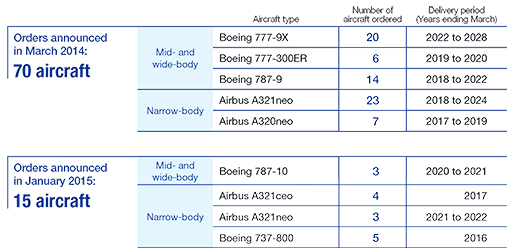
ANA and the A380: Airbus wins a new customer in return for invaluable Skymark support

ANA_orders (Source - ANA)

ANA_orders (Source – ANA)


“ANA is likely to become an A380 operator, with three aircraft due for delivery from 2018. Operating the A380 was not in ANA’s plans. In fact, as ANA itself has itself stated, there are many arguments against taking A380.

The aircraft order appears to be a trade-off: ANA won the last minute support of Airbus to vote for its restructuring plan of the bankrupt Skymark Airlines. There was little obvious reason for Airbus to back ANA, a tiny Airbus customer, over the alternative restructuring plan proposed by Delta, itself a major Airbus operator. It may be that in exchange for Airbus’ support ANA agreed to do more business with Airbus.”    (CAPA – Center for Aviation)


Looking forward to more A380 and other Airbus orders (and, therefore, less Boeing orders) for the Japanese Market!! What do you think?


Read more from: ANA and the A380: Airbus wins a new customer in return for invaluable Skymark support


Electric planes aim to reach new heights

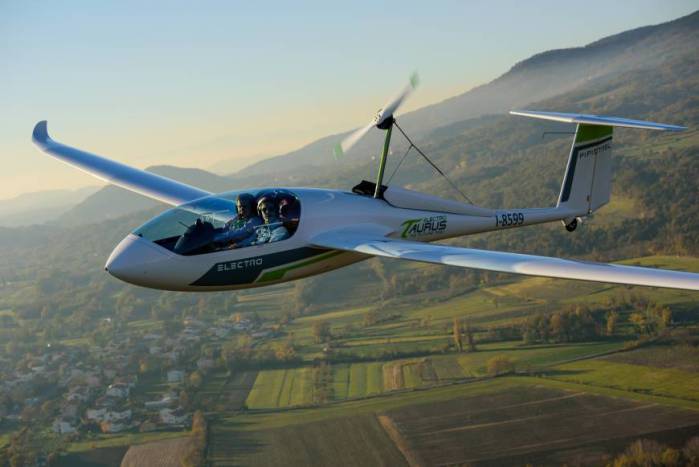
Pipistrel’s pioneering Taurus Electro - Electric Plane (Slovenia)

Pipistrel’s pioneering Taurus Electro – Electric Plane (Slovenia)


“Ultra-light, fast and cheap: more than a century after the Wright brothers flew the world’s first powered aircraft, a small Slovenian company now hopes to revolutionize the aviation industry with its award-winning electric planes.

Pipistrel’s pioneering Taurus Electro is seen as a breath of fresh air in a sector responsible for 13 percent of carbon dioxide emissions from all transport sources.

Launched in 2007, around 20 orders are now put in every year for the two-seater plane, which is produced in a factory in the town of Ajdovscina, close to the Italian border.

The €110,000 ($120,770) price tag is offset by the plane’s inexpensive maintenance: at 70 cents an hour, the Taurus is 10 times cheaper to run than traditional twin-seater planes, according to Pipistrel.

Simplicity is key: you charge the battery, hop inside the cockpit and hit the “on” button to activate the fuselage’s propeller.

The large-winged aircraft can thrust itself to an altitude of 2,000 meters (6,500 feet), after which the engine is retracted and the Taurus glides across the sky as a sailplane.

“You have just two buttons, up and down and full power, but you can always switch off immediately when you need to slow down the aircraft,” explained pilot Nejc Faganelj, soaring high above the Slovenian countryside on a sunny winter’s day.

But behind the deceptively easy usage lies a highly complex design. The most crucial element — and biggest challenge — is the lithium battery, which needs to be light yet sturdy so that it doesn’t catch fire if it overheats.

“To copy a design from the car industry is not that difficult. But to make something that is lighter, more efficient — that is definitely something that has not been done before,” said Pipistrel engineer Jure Tomaciz.

Now Pipistrel has even loftier ambitions: to sell the world’s first electric four-seater plane.

Its Taurus G4 prototype — built by combining two twin-seaters — won NASA’s prestigious Green Flight award in 2011, worth $1.35 million.

The plane covered 650 km (400 miles) in the space of two hours with an average speed of 172 kph.

“The car industry, with all the money it has at its disposal, and practically no weight limitation, even today isn’t capable of producing an electric car that would take four passengers for 600 km at a speed of 200 kph,” Pipistrel’s founder, Ivo Boscarol said.

“We did that with our electric plane,” he added.   (Source – Grendz)


Great vision and invention, in line with COP21!

We need more entrepreneurs like that! What do you think?

Read more fromElectric planes aim to reach new heights


MRJ’s Latest Development Status

20151127_MRJ_3rd Flight Test_3 (Picture - Mitsubishi Aircraft)

20151127_MRJ_3rd Flight Test_3 (Picture – Mitsubishi Aircraft)


“Nagoya, December 24, 2015 –Mitsubishi Aircraft Corporation and Mitsubishi Heavy Industries, Ltd. (MHI) today announced that the companies will change the first delivery schedule of the MRJ (Mitsubishi Regional Jet), their next-generation regional jet, from the second quarter of 2017 to approximately one year later.

The first flight and the subsequent flight tests have confirmed the basic characteristics to be satisfactory. However, we also have recognized several issues as we attempt to accelerate our development. In order to tackle these issues and address the perspectives below, we have reviewed and revised our overall schedule.

Specifically, in the progress of our engineering work together with experts in the United States, we have made additions to and revisions of test items in order to complete a better-integrated aircraft. These have been reflected in the new delivery schedule. In addition, we have undertaken an overall review with our partners, and reflected this in our development schedule.

Looking ahead, we will be managing our milestones, and increasing the precision of our schedule as we progress. We will also carry out flight test campaign in North America as soon as feasible and assign the roles and responsibilities of the three engineering bases (Mitsubishi Aircraft Headquarters, Seattle Engineering Center and Moses-Lake Test Center) for prompt execution in all fields. With all these measures, we aim to propel the development of the MRJ.

We remain firmly committed to providing our customers with better-integrated aircraft with higher levels of safety and reliability, as well as high-quality services.”       

(MRJ’s Press Release:  Mitsubishi Aircraft Corporation & Mitsubishi Heavy Industries, Ltd)

We regret the delay but it is probably necessary in order to complete a better aircraft!

Looking forward to seeing the results!


Recycled Paper Churches from architect Shigeru Ban (Japan) !!

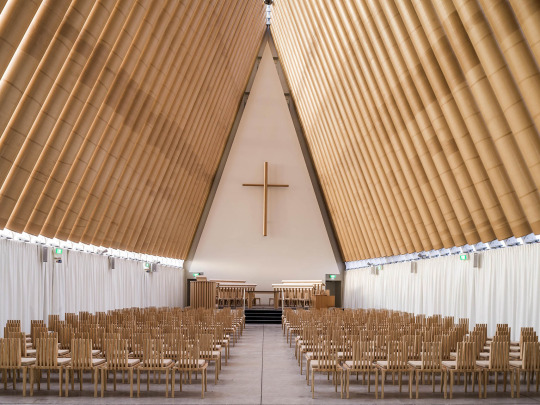
Cardboard Church, Christchurch, New Zealand (Yahoo UK, Photo: Courtesy of Shigeru Ban Architects )

Cardboard Church, Christchurch, New Zealand (Yahoo UK, Photo: Courtesy of Shigeru Ban Architects )


“Japanese architect Shigeru Ban operates in extremes, creating everything from disaster housing made of beer crates to museums with price tags in the tens of millions of dollars. But whatever the cost, all of his projects have embraced simple materials and natural surroundings. Ten years before winning the Pritzker Architecture Prize in 2014, for example, Ban convinced the UN that his recycled-paper tube shelters could house refugees of the Rwandan civil war, a feat that eventually led to his TED talk on emergency shelters—and one that has made a lasting impact on the architecture world.”   (Yahoo UK – Decor Contributors)


This is an example of how Japanese Innovation in Architectural Design can contribute to the world’s needs!!  If you know of other interesting applications originating from Japan, please let us know!


Read more from:   Paper Church from Shigeru Ban


US: FAA awards type certification to HondaJet

HondaJet HA-420 (Picture - Flightglobal & Honda Aircraft)

HondaJet HA-420 (Picture – Flightglobal & Honda Aircraft)


“The HondaJet HA-420 light business jet has received FAA (US Federal Aviation Administration) type certification (on December 8), allowing Honda Aircraft to begin making deliveries within days.

Greensboro, North Carolina-based Honda Aircraft has been pursuing certification of the light jet for more than 12 years. The original HA-420 prototype completed first flight in 2003 but flight testing prompted Honda to redesign and enlarge the aircraft’s engine. A partnership with GE Aviation produced the HF120 turbofan.

Honda Aircraft chief executive Michimasa Fujino announced at the NBAA convention in November that the HA-420 had also completed functional and reliability testing, ending the flight test phase of the certification campaign.” (Flightglobal)


Great news but when will we see some “action” in Europe? Looking forward to that!

What do you think?


Read more from:

US: FAA awards type certification to HondaJet


Top 100 aerospace companies (Flightglobal ranking)

Top 100 Aerospace Companies (Picture - Flightglobal)

Top 100 Aerospace Companies (Picture – Flightglobal)


Flightglobal Analysis:

Aerospace industry financial data from 2014 underscores the obvious: this industry is riding a decade-long growth wave. Our analysis, compiled by the aerospace experts at PwC, shows that, barring a wobble during the darkest days of the financial crisis, makers of aircraft and their suppliers mostly sloughed off the downturn and then surged during an otherwise weak recovery. Indeed, aerospace can be said to be enjoying an economic super-cycle.

All-time sales records have fallen two years running, and growth is pushing double digits. The big two, Boeing and Airbus, are delivering aircraft, and taking orders, at rates that would have gobsmacked industry bosses 15 years ago – validating, it would seem, long-range demand forecasts that are giving today’s aerospace leaders the confidence to invest.

Can it go on? The optimistic assumption has long been that rising wealth in emerging markets is translating into a demand for travel that will endure – and aerospace growth has been outpacing world GDP for years.

But Brazil and India are on the buffers. Russia is suffering and only a fool would assume that a Chinese crisis – and hence, quite possibly, a global crisis – is out of the question. The slump in oil prices takes the urgency out of replacing ageing, relatively thirsty, aircraft fleets. And turmoil in the Middle East might lead US and European governments to boost defence spending, but the net effect of conflict would surely be negative.

But as many an industry insider has noted, even if half the orderbook evaporated, the aerospace industry would still be in fine shape.


What is your vision or forecasts for the future of the Aerospace Industry? What do you think?


Download the TOP 100 Report from:

https://www.flightglobal.com/news/articles/analysis-top-100-aerospace-companies-416514/?cmpid=NLC|FGFG|FGFIN-2015-0915-GLOB


Is Japan’s future an Hydrogen Society??

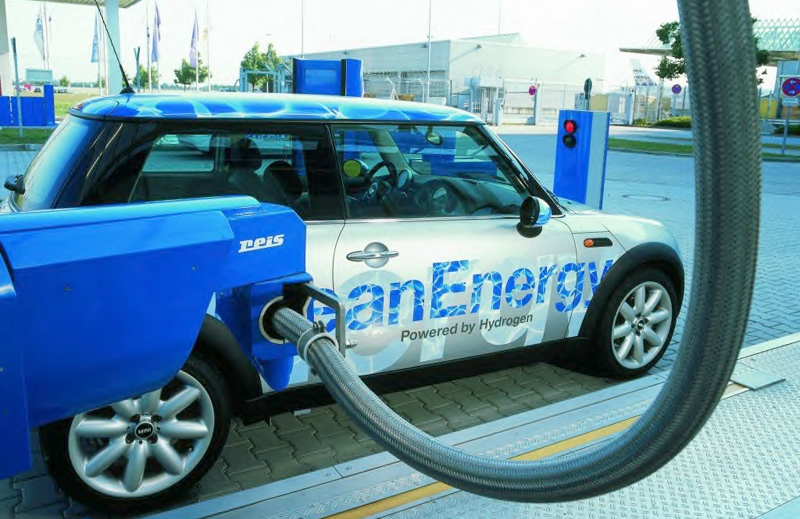
Hydrogen Fuel Car (picture - ORNL)

Hydrogen Fuel Car (picture – ORNL)


Toyota’s plans to build a hydrogen-based society

The Japanese automaker says it will sell 30,000 fuel cell vehicles by 2020 and use hydrogen at its factories to reach ambitious environmental targets.

While other automakers are investing more into electric vehicles as a means to reduce tailpipe emissions, Toyota is betting on hydrogen and hybrid cars.

The automaker sold more than 1.2 million hybrid vehicles in 2014 and expects to reach 8 million in worldwide cumulative hybrid vehicle sales by 2015.

Hydrogen cars are another matter. Toyota launched its first fuel cell vehicle, the Mirai, in late 2014. To reach its 30,000 annual sales goal by 2020 it will have to increase production volume tenfold from 2017. The car, which the EPA says has a 312-mile range, will debut in the U.S. market (just California) this fall. Even if customer demand for the fuel cell vehicle tops expectations, sales will likely remain sluggish until infrastructure problems are solved.

There are only 12 public hydrogen fuel stations in the United States, according to the Department of Energy. Ten of those are in California, making it the only feasible market in the U.S. for hydrogen cars.

In Japan, hydrogen cars have at least a fighting chance, thanks largely to a push by Toyota, Nissan, and Honda.

Toyota isn’t stopping with vehicles. The company wants to “foster a hydrogen-based society,” which means using hydrogen in cars, buses, and manufacturing. To do that, Toyota says it is making 5,680 fuel cell patents freely available and collaborating with other automakers to support the development of hydrogen infrastructure.

Toyota plans to use hydrogen and renewable energy such as wind power to cut emissions generated when manufacturing its cars.”   (Fortune)


Is Japan’s future an Hydrogen society?? 

What about Electric vs Hybrid vs Hydrogen fuel Cars?

Do you share Toyota’s vision? It is a brave and smart move!!

What do you think?


Read more from:

http://fortune.com/2015/10/14/toyota-hydrogen-goals/


“The Japanese government has joined forces with some of the country’s biggest manufacturers to push for what it’s calling a “hydrogen society,” in which everything from buses to cars to homes are powered by the plentiful, zero-emission fuel.

A big coming-out party for the hydrogen society is planned for the 2020 Tokyo Olympics, when hydrogen-fueled buses will ferry athletes and fans around Olympic event sites. The government and companies including Toyota and Iwatani are working together to build a network of hydrogen fueling stations—there are around a dozen across the country already, with the goal of 35 up and running by 2020.”    (Fortune)


Read more from:

http://fortune.com/2015/10/21/japan-hydrogen-fuel/


More about the first, second and third MRJ Test Flights !!


“At 9:35 a.m. on November 11, the first flight test aircraft of the MRJ approached takeoff speed, easing up slowly at first, then quietly soared into the autumn sky. After its takeoff at Nagoya Airport, it proceeded to training airspace over the Pacific, with a view of Mt. Fuji in the distance. Tests confirmed the aircraft’s basic characteristics in maneuvers including ascent, descent and circling left and right. The first flight test aircraft reached a maximum altitude of 15,000ft (approx. 4,500m) and a maximum speed of 150Kt (approx. 280Km/h).

It landed at Nagoya Airport at 11:02 a.m., completing a successful first flight lasting 1 hr., 27 min. Cheers of delight and relief were heard from officials looking on from a gathering area by the runway and engineers standing ready in our office to handle possible contingencies, as well as from crowds of people watching from parks and other locations in the vicinity.

For us, for Japan, and for the worldwide aviation industry, November 11, 2015, will go down as a historic day. This test accomplished the first flight of a domestically-developed passenger airliner since the YS-11 53 years ago.

After the first (successful) MRJ (Mitsubishi Regional Jet) Test Flight on November 11,  Mitsubishi Aircraft Corporation conducted the 2nd & 3rd flight tests of the first flight test aircraft  on Thursday, November 19 and Friday, November 27 respectively.”         (Mitsubishi Aircraft’s PR)


Congratulations!

The GBMC Team


More Test Flight Videos from:

and

Mitsubishi MRJ Movie Theater


Belgium’s 10 innovative startups

Belgium (Wikimedia commons)

Belgium (Wikimedia commons)


“Belgium is bursting with creative and engineering talent. Meeting close to 1,000 Belgian tech founders and CEOs every year, I am always wowed by the often unique and innovative approaches of many of the country’s startups.

Two thirds of the startups in Belgium are B2B, the complete opposite of the 2/3-heavy B2C Silicon Valley. It shouldn’t come as a surprise. Belgium is right in the middle of the so called Blue Banana, the region with the most diverse industrial capabilities, expertise, and infrastructure in the world. It’s not a coincidence that Raspberry PI and Arduino were born here. It explains why the renaissance of hardware (startups) is taking place here and not in China or the U.S. So if you’re a B2B or hardware SME, leave the Valley aside and embrace the capital of the EU.” 

(Omar Mohout, Geektime.com)


Read more from:

Belgium’s 10 innovative startups


Japan is going to the Moon!!


a Japanese Robot on the Moon?

a Japanese Robot on the Moon?


Read more from:

Japan is going to the Moon!!   and

Maido-kun humanoid robot to the moon


We need an update on the status of the Maido-kun project (a humanoid robot to be developed by SOHLA in Higashi-Osaka) but JAXA is definitely targeting the Moon!  Which wonders will Japanese fine precision technologies deliver? What do you think?


Design a site like this with WordPress.com
Get started