Category Archives: Technology

Is Japan’s huge Music Market behind?

Music streaming service in Japan

Music streaming service in Japan


“Google has launched a music streaming service in Japan, becoming the latest tech giant to push into the world’s No. 2 music market, despite mixed results among earlier arrivals.

The U.S. company said that its Japanese edition of Google Play Music features more than 35 million tunes available at a cost of ¥980 ($8) a month.

The launch came after similar services debuted in Japan this year by Apple, popular messaging app Line, and a joint venture by IT firm CyberAgent and Japanese music giant Avex Group.

Japan is the world’s second-largest music market, estimated to be worth $2.6 billion in 2014, after the $4.8 billion U.S. market, according to the Recording Industry Association of Japan.

But packaged media such as CDs account for about 80 percent of Japanese music sales, contrasting sharply with the U.S. market where digital downloads are soaring.”


(Global) Key players in Music Streaming seem to be late in entering the huge Japanese Music Market. Packaged Media (CDs) are still predominant and far more popular than digital downloads in the “country of the walkman”, where the latest electronics gadgets and mobile phones have always been welcomed!  Is Japan’s huge Music Market behind? And for how long? What do you think?


Read more from:

Is Japan’s huge Music Market behind?


Japan: when the electricity market gets deregulated!

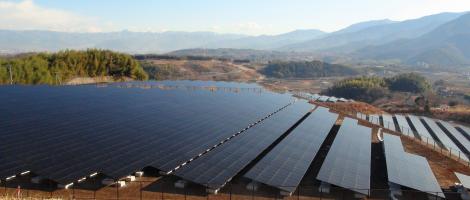
Mount_komekura_photovoltaic_power_plant (Wikipedia)

Mount_komekura_photovoltaic_power_plant (Wikipedia)


“News that 7-Eleven stores in the Kansai region will trade Kansai Electric Power Co.’s electricity in favor of cheaper electricity from Tokyo Electric Power Co. has locals wondering if Kepco’s six-decade monopoly over Kansai’s electricity supply might be ending.

From October, about 1,000 Seven-Eleven Japan Co. Ltd. stores in three Kansai prefectures will purchase their electricity from Tepco. The move comes just months after Kepco raised rates, and Seven-Eleven Japan, noting Tepco’s cheaper fees, made the move to switch utilities.

With deregulation in the smaller users electricity market set to begin next April, giving small businesses and residential customers a wider option of providers, Kepco seems particularly ill-placed to take advantage of the new competitive environment.” (The Japan Times)


It is great to see the positive aspects of the after-2011 period: lower energy consumption in Japan as a result of national saving awareness, wider introduction of renewable energies, enhanced price competition between the market players and utltimately the end of old monopolies! Time to reduce bonuses at Kepco? What do you think? 


Read more from:

Japan: when the electricity market gets deregulated!


Wind Turbines Tech: are we witnessing a race for (Electric) Power?

Siemens-7MW-Osterild (source - Clean Technica)

Siemens-7MW-Osterild (source – Clean Technica)


Siemens Looks Toward Next-Generation 10–20 MW Wind Turbines

“Siemens has for some time been known to have its sights on developing the next generation of wind turbines — a class of platforms rated to 10 MW and above. But as a new manufacturing plant takes shape, the company’s management has begun speaking more openly on activities geared towards those objectives.

Siemens recently signed off on a new German factory that will produce its flagship 7 MW offshore turbine. The new manufacturing plant is slated to begin production in mid-2017 and will be tasked with assembling generators, hubs, and nacelle backends together into complete nacelles — the working body of wind turbines to which blades are connected.”     (Clean Technica)

The bigger the turbines, the bigger the environmental (noise) issues? What about integrating these giants in our landscapes? Maybe, using many smaller turbines instead might be more environment-friendly? What do you think?

Read more from: Wind Turbines Tech


SIM card vending machines: how more convenient can Japan be?

A prepaid SIM card vending machine at Narita International Airport in Narita in Chiba Prefecture (Shoichi Otsu, Asahi Shimbun)

A prepaid SIM card vending machine at Narita International Airport in Narita in Chiba Prefecture (Shoichi Otsu, Asahi Shimbun)


“NTT Communications Corp. has installed vending machines for prepaid SIM cards at Narita International Airport, offering an easy option for users to activate their mobile phones and other devices on arrival.

Users simply scan their passports to register identification information.

The machines operate around the clock. One is in the arrival lobby of Terminal 1 and the other is in the arrival lobby of Terminal 2.

NTT Communications installed the machines because of the continuing rise in foreign visitor arrivals.

Previously, SIM cards were only available at stores in the airport.” (The Asahi Shimbun)


In the country of convenience stores (“conbini” in Japanese) and of all kinds of vending machines, SIM cards can be bought now from  vending machines: how more convenient can Japan be? What do you think?


Read more from:

SIM card vending machines: how more convenient can Japan be?


Japan: Robots helping to reduce farmers’ and fishers’ workload!

Robots for farming and fishing (from The Yomiuri Shimbun)

Robots for farming and fishing (from The Yomiuri Shimbun)

“Research institutes and universities in Japan are developing robots to play an active part in the primary industries of agriculture and fisheries, which are suffering from aging workers and a lack of manpower. The robots are intended to alleviate the farmers’ workload and improve the quality of crops.

The Agriculture, Forestry and Fisheries Ministry actively supports the move with the idea of “making good use of Japan’s robotics technology, which has long been utilized mainly in factories, now in the field of agriculture.”

The central government set a goal in January to quadruple the size of the robot market to ¥2.4 trillion by 2020, and the primary industries are positioned as a crucial field in which to utilize the robots.

The average age of farmers in Japan was 66.7 in 2014, with 64 percent of them 65 or older. Under the circumstances, there is great interest in using robots to make up for a shortfall in agricultural manpower.” (The Yomiuri Shimbun)


These are all great applications for Robotics Technology whose future seems bright. The next challenge is commercialisation! What do you think?


Read more from:

Japan: Robots helping to reduce farmers’ and fishers’ workload!


Kyushu (south of Japan): the “train of dreams” is alive !!


JR Kyushu-luxury train

JR Kyushu-luxury train (Picture: JR Kyushu)


Luxury ‘dream train’ designed over 100 years ago goes into service in Kyushu!

.
Kyushu Railway Co. (JR Kyu-shu) has just launched the commercial operation of a luxury passenger train, a revival of a dream train created more than a century ago. The train, Aru Ressha, features a gold and black exterior with an arabesque design and a gorgeous interior comparable to that of a luxury hotel. Passengers are served a first-class sweets course that uses seasonal food from the region. The train was originally built by a U.S. company in 1908 following an order from the then predecessor of JR Kyushu, but did not go into service at the time as the Japanese company was nationalized.” (Japan Times)

.
Read more from:

Kyushu (south of Japan): the “train of dreams” is alive !!


Japan sets 26 percent cut in greenhouse gas emissions as 2030 target

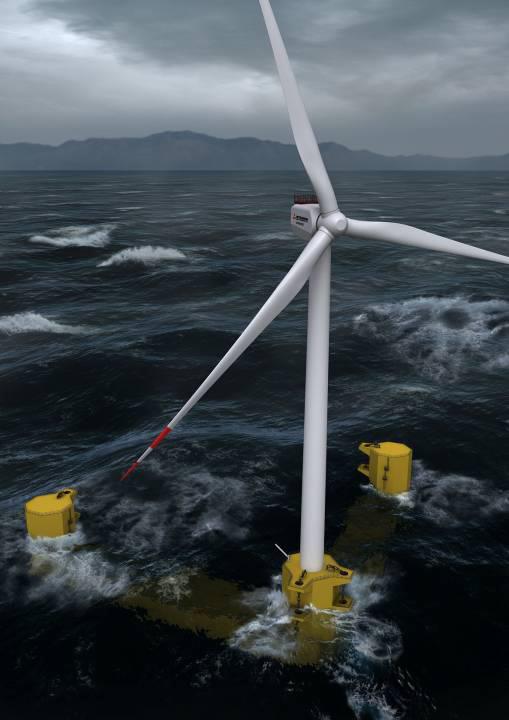
Mitsubishi floating concept

Mitsubishi floating concept


” The government said Friday that Japan will slash greenhouse gas emissions by 26 percent by 2030 from 2013 levels and will submit the plan to the United Nations as its contribution to a global summit on climate change in Paris in November. METI on Thursday said the government will plan to make nuclear energy account for 20 to 22 percent of Japan’s electricity mix in 2030, versus 30 percent before Fukushima. It set the target for renewable energy at 22 to 24 percent of the mix, liquefied natural gas at 27 percent and coal at 26 percent.” (Japan Times)

Read more fromJapan sets 26 percent cut in greenhouse gas emissions as 2030 target


FrenchTech : 2015 Ranking of the 100 most innovating startups in France

La French Tech (source maddyness)

La French Tech (source maddyness)

EBG’s Top 100 ranking (2015) is based on various criteria such as technological innovation, the business model, the funds raised, maximum 5 years of age …..

The list contains the following categories:

– Marketing and eCommerce

Alkemics, The Beautyst, Fitizzy, Howtank, TVTY, Holimetrix, Antvoice, Realytics, Mediabong, Data Publica, Fitle, Toky Woky, Search XPR, Vigiglobe, Braineet, Evercontact, Dolmen Technologies, Videodesk, Clic2buy, Lucky Cart, Shippeo, Itinsell, LabSense

– Internet of Things

Matooma, Myfox, Actility, Busit, RED Luxury, Drust, Optiflows, Sevenhugs

– Big Data

OpenDataSoft, Semsoft, PredicSis, Cogniteev, Dataiku, Lokad, Heuritech, Flaminem

– Fintech

Paymium, Weeleo, Fundshop, Kantox,The Assets, Marie Quantier, SmartAngels, Lendix, Antelop Payments,Finsquare, Scaled Risk, Anatech, Unilend,Yoyowallet, Finexkap

– Mobile and Media

Adyoulike, Dynadmic, Vidcoin, Wildmoka, Ogury, Pretty Simple, AdotMob, Sublime Skinz

– Organisation’s Productivity

Azendoo, SimpliField, InterCloud, Tryane, Yseop, Algolia, Keycoopt, Bubblz, BiBOARD, Azalead, Advanseez et SmartPanda

– Disruption and New Concept

Snips, DigiSchool, Smart Me Up, Redbird, Sepage, Mip Robotics, Koolicar, Ceetiz, Plume Labs, Uplike, Blue Frog Robotics, Coephe, The Bubbles Company, Streamdata

– eHealthcare

1001 Pharmacies, Feeligreen, Smokio, Data Med Care, Care Labs, Kresterion, Umanlife, Santech, BodyCap, Ad Scientiam, Genepred.

More info from:

FrenchTech : 2015 Ranking of the 100 most innovating startups in France

(Source: Maddyness.com and EBG = Electronic Business Group)


South of Japan: JR Kyushu to be fully privatised in fiscal 2016

GBMC's avatarwww.gbmc-blog.biz

Train in Kyushu (image source: JR Kyushu) Train in Kyushu (image source: JR Kyushu)

The Japanese government has recently decided to put Kyushu Railway Co. under full private ownership in fiscal 2016. It has decided to pursue full privatization because JR Kyushu has achieved good business results in the fields of real estate and hotels, according to officials. JR Kyushu is one of seven railway operators established after the breakup of Japanese National Railways, or JNR, in April 1987.

Time to invest maybe?

Read morehttp://www.japantimes.co.jp/news/2015/02/27/business/corporate-business/jr-kyushu-to-be-fully-privatized-in-fiscal-2016/#.VPLxQek3PIU

View original post


Is Japan experiencing a Robot Revolution?

Japanese robot on the moon

Japanese robot on the moon


“Japan is one of the few countries in the world likely to experience something that popular movies have predicted for years: a robot revolution. With PM Abe’s release of his plans for economic structural reform, the topic of creating a Robot Revolution Realization Council came to fruition. The premise of this council is to examine the possibility of introducing more robots into sectors such as manufacturing, agriculture, transportation, and even nursing care to help foster growth in Japan.”    (Riley Walters, The Daily Signal)

More insight from:

Is Japan experiencing a Robot Revolution?


Design a site like this with WordPress.com
Get started