
“Education is the most powerful weapon to change the world.” (Nelson Mandela)
“But education doesn’t take place in stuffy classrooms and university buildings, it can happen everywhere. Travel is a good option.” (Richard Branson)
Tag Archives: GBMC
Education vs Travel. What do you think ?
8 Things you should know About Doing Business in Japan
GUEST BLOG –
Today, we post a paper written by one of our partners,
David Clive Price of “The Master Key to Asia” Blog,
an expert in Asian business culture & communication.
_________________________________________________________
8 Things You Should Know About Doing Business in Japan by David Clive Price
Sometimes even people who have lived and worked in Japan complain that doing business in the country is like trying to read Emoticons without knowing what they mean.
You’re never quite sure what’s going in in a business meeting, presentation or negotiation, and you aren’t allowed to ask because you won’t get a straight answer. You might not get an answer at all!
1) Personal dignity or face is very important to the Japanese, so they work hard to save ‘face’, to give other’s ‘face’ and to avoid anyone losing ‘face’. The result is that the Japanese tend to be rather rule bound, highly methodical and fastidious in their daily activities. This meticulousness has several positive sides, but foreigners in Japan often find that the Japanese view bending rules and procedures as tantamount to losing face. Independent thinking is not always encouraged.
2) This has particular relevance to decision-making. Face-saving and delaying tactics are often used in business to avoid giving a clear, logical response to proposals. This gives the Japanese side time to consider proposals and – crucially – to wait until a personal relationship is established. Non-verbal techniques to avoid responses include a hissing sound made by indrawn breath, vaguely worded and evasive questions, and a love of paradox (for en excellent guide, see Five Things about Haragei: the Japanese Business Language).
So don’t worry if your Japanese counterparts remain silent for long periods of time, or close their eyes when they are listening to you. They are not going to sleep. They are concentrating.
But if so much activity is non-verbal and indirect, how are decisions ever made?
3) The answer is that decisions are based on a time-consuming process called nemawashi (‘binding the roots together’).
There is a strong hierarchical and collectivist system in Japan, which means that your proposal has to work its way through several layers of management and internal consultation.
The Japanese client will seek to obtain consensus from specialists in planning, manufacturing, marketing and at many other levels about your ideas. This process of nemawashi means a lot of time-consuming consultation.
4) So what should you do in the meantime? You should build up your avenues of communication.
Few Japanese speak or understand English well, although the situation has much improved in the last twenty years. So it is important to provide written information and to continue to provide information on any questions in both English and Japanese on your company, your proposal and what your clients have said about you. The quality of your presentation and subsequent material will reveal to the Japanese the standards of your company, its reliability and products.
5) You should also do further research on the Japanese company itself.
At your first meetings several associates will probably accompany your Japanese counterpart.
An experienced Western executive will find out who the key senior decision-makers are after liaising with outside intermediaries that have a good relationship with people within the company. Local knowledge and well-respected local contacts are crucial.
6) You must also make sure that your personal relationship with your client is carefully developed.
Eating, drinking, singing karaoke (sometimes an acquired taste) and general socializing with Japanese clients after work is essential. This initial social interaction is part of the long-term process of building a successful relationship.
Business lunches and dinners are good times to get to know your Japanese counterparts, so never turn down an after-hours invitation. Just be careful not to disclose too much or become over-personal despite the beer and saké flowing!
The key is participation. You don’t have to be champion drinker, or a lover of sushi and sashimi, or an Elton John or Liza Minelli. You just have to take part.
7) Similarly, don’t refuse any requests for a small amount of business to begin with.
It will be a trial of your ability and trustworthiness. And at the end of every meeting, offer a small gift as a token of esteem to the most senior person.
8) Always remain polite and soft-spoken and expect only incremental progress.
As a general rule, the Japanese do not see contracts as final and they will prefer a broad mutual understanding so that the essential element of flexibility can be maintained. At the end of the day, when the Japanese are ready things can move very fast, and implementation will be thorough and precise. Patience will be rewarded!
________________________________________________________
If you want to know more about doing business successfully in Japan and in other countries of Asia, I offer a free special report ’3 Key Elements of Asian Business Culture’ on my website www.davidcliveprice.com, which will help you focus your efforts on the areas that really count.
© David Clive Price. Want to use this article for your website or ezine? That’s fine as long as you share it complete with the following:
David Clive Price is an international speaker on Asian business cultures and author of the The Master Key to Asia and several other books on Asia. As a business adviser, he helps entrepreneurs and businesses to improve their knowledge of Asian cultures to grow their profits and promote their brand.
________________________________________________________
LONG TERM SALES STRATEGY IN JAPAN
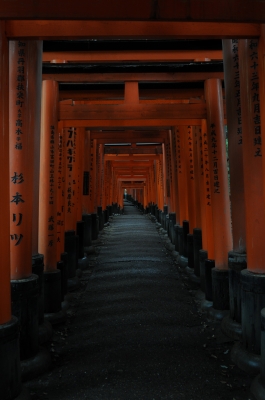
GBMC’s paper published on one of our partner’s Blog: “The Master Key to Asia” Blog (David Clive Price’s Blog)
http://davidcliveprice.com/long-term-sales-strategy-in-japan-by-philippe-huysveld/
May 13, 2013
Hard sell or cold calling techniques can work very well when you are in your “comfort zone” or sales territory. This is no more the case when you have to develop your customer network from scratch, outside your “comfort zone”, in a new sales territory and even more in a remote and exotic country like Japan. Here, in addition to dealing with cross-cultural issues and language barriers, soft sell techniques are more appropriate.
History and Challenges of the Japanese Economy (in brief)

Article in French about the History and the present challenges of the Japanese Economy:
http://lecercle.lesechos.fr/economie-societe/international/asie/221171740/a-bientot-nouvelle-page-japon
Le Cercle Les Echos, May 2, 2013
Is Japan still Innovative ? What do you think ?

Paper in French on Innovation in Japan:
Le Cercle Les Echos, April 12, 2013
Give more than money: share your talent !
Good point: “… ask yourself if you have given more than money. Ask yourself if you have given of your talents as a leader and as a visionary. Your business is not the only place where those talents are needed. The cultural institutions and the people who use them need those talents too.” (Mikitani-san) !
NEW ! Release of GBMC Book on the History of the Japanese Economy (in French) !
*** NEW *** ANNOUNCEMENT ***

The eBook “Lecture Economique de l’Histoire du Japon” (in French) by Philippe Huysveld – GBMC
is available for sale right now on the following sites:
1) available on LULU.COM using the following link:
2) available on YOUSCRIBE.COM using the following link:
3) available on AMAZON / Kindle (worldwide) using the following links
(for France):
(for US):
(for Japan):
A paper copy or an english version might be available in the future, if there is a demand for it.
Philippe Huysveld
GBMC
*** BOOK DETAILS ***
eBooks, 64 Pages

Prix : € 9,99, ¥ 3,000, $13.05
Téléchargement immédiat.
Cet ouvrage s’adresse aux étudiants suivant un programme d’études en langue ou commerce japonais, ou encore au lecteur averti intéressé par l’Histoire et l’Economie du Japon.
Le Japon de 2013 se trouve à la croisée de nombreux défis de taille, qui sont abordés succinctement en fin de livre. Deux ans après le « tsunami » meurtrier de la région de « Tohoku », où en est le processus de reconstruction ? Suite à l’accident de Fukushima, le nucléaire va-t-il être remplacé par les Energies Renouvelables ? La population japonaise vieillissant terriblement et le taux de natalité étant très bas, comment le pays va-t-il y remédier ? En repensant le système d’emploi à vie et en promouvant le travail des femmes, des jeunes et des seniors ? Le Japon est-il toujours un pays Innovateur ? Que fait-il pour préserver l’environnement ? Quel est son intérêt à participer à la constitution de méga-blocs commerciaux tels que TPP et autres ? Tous ces sujets sont d’actualité, l’Histoire économique se faisant de nos jours.
Le Japon de 2013 se trouve à la croisée de nombreux défis de taille, qui sont abordés succinctement en fin de livre. Deux ans après le « tsunami » meurtrier de la région de « Tohoku », où en est le processus de reconstruction ? Suite à l’accident de Fukushima, le nucléaire va-t-il être remplacé par les Energies Renouvelables ? La population japonaise vieillissant terriblement et le taux de natalité étant très bas, comment le pays va-t-il y remédier ? En repensant le système d’emploi à vie et en promouvant le travail des femmes, des jeunes et des seniors ? Le Japon est-il toujours un pays Innovateur ? Que fait-il pour préserver l’environnement ? Quel est son intérêt à participer à la constitution de méga-blocs commerciaux tels que TPP et autres ? Tous ces sujets sont d’actualité, l’Histoire économique se faisant de nos jours.
Let us share a thought or a prayer for the victims of the 3/11 Earthquake !
As you all know, about 2 years ago, a tremendous earthquake (magnitude 9) followed by a lethal “tsunami”, countless aftershocks and a major nuclear accident at Fukushima, struck the North-East coast of Japan. With nearly 20000 people dead or missing, still over 342000 evacuees, this has been a major challenge for the country. Let us share a thought or a prayer for the victims.
About 10 days ago, I attended a high-level Conference on the Reconstruction Process at the Chamber of Commerce in Paris. Fed with a lot of data and presentations about what had been done for the past 2 years, I was impressed to see how well the Japanese nation had rebounded after the disaster: solidarity, volunteer work, 10 year reconstruction plan, new reconstruction agency, new investments, tax breaks, grants for reconstruction projects ….
What I found most remarkable is that, rather than just rebuilding the same communities, the Japanese took the opportunity to rethink how and what to build, further, came up with a new concept of “Smart Community” where renewable and clean energies (solar, wind, geothermal) will be produced locally and feeding the new town, where all cars and buses will be electric vehicles, where the whole town energy consumption will be monitored by a Control Center or Energy Management System ….
Well done ! As stated during the presentations, revitalizing disaster hit areas will play a leading role in the emergence of a dynamic new Japan:
RECONSTRUCTION + REVITALIZATION = DYNAMIC GROWTH !
東北の皆様へ、頑張れ !!
Recognize and remember your customers !
After all, customers are kings !! Good point from Don Peppers
 www.gbmc-blog.biz