
Read my (e)Book “CHRONIQUE DU JAPON DES
ANNEES 90” (in French) and learn more about Japan!
Source: CHRONIQUE DU JAPON DES ANNEES 90
Read my (e)Book “CHRONIQUE DU JAPON DES
ANNEES 90” (in French) and learn more about Japan!
Source: CHRONIQUE DU JAPON DES ANNEES 90

“The first edition of this book was released under digital format (eBook) in 2014. In 2015, a second edition of the eBook was released, containing, besides minor changes here and there, two important additions: Chapter VII about “the Japanese Consumer Mindset” and Chapter XI about “3 Keys for Success in Japan”. In 2017, the third edition is being released with a new Table of Contents and a revision of Chapter XI, becoming “5 Keys for Success in Japan”.
This book is targeted at business executives of companies:
• approaching the Japanese Market,
• reviewing their options in terms of Japan Entry Strategy,
• already exporting to Japan (Indirect Sales) or,
• already established and doing business in Japan (Direct Sales).
In this book, we show:
• That the Japanese Market is a great market to approach and that, provided the right methodology and marketing mix, there are great opportunities to seize in the long-term for foreign companies.
• That it is necessary to get familiar with cross-cultural differences and to understand better your Japanese clients, their country, their culture and their business system.
• How to market your products or services in Japan (B2C and B2B Marketing Guidelines).
• Which Entry Strategies are available to foreign companies to choose from and guidelines for selection.”
More information from our Press Release at http://gbmc.agence-presse.net/?p=30&preview=true
or from our website at http://www.gbmc.biz/survival-guide–e-book.html

Lecture Economique de l’Histoire du Japon
Nous vous invitons à lire la Troisième édition du livre “Lecture Economique de l’Histoire du Japon” !!
Source: Lecture Economique Histoire Japon, eBook, Philippe Huysveld
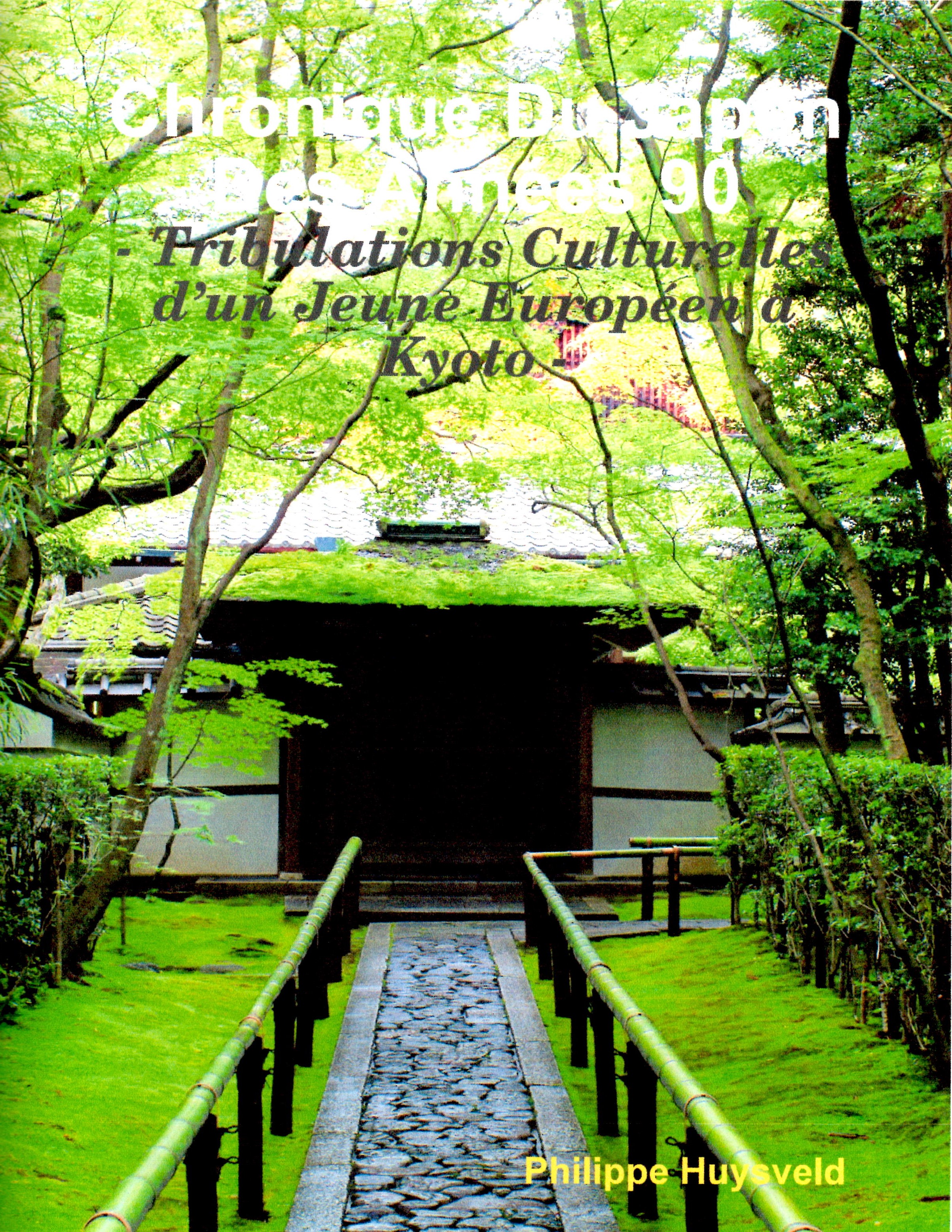
This book, by Philippe Huysveld, is a screening of Japan in the 1990s, from a cultural, travel, social, economic and academic perspective. It is intended at foreign students studying in Japan or at expats living in Tokyo as well as at the motivated reader or tourist interested in knowing more about the Culture, Society, Education and Economy of Japan.
Par Philippe Huysveld (GBMC)
« Ayant séjourné 30 mois (d’octobre 1992 à avril 1995) à Kyoto, la capitale culturelle du Japon, et ayant voyagé beaucoup à l’intérieur du pays, l’auteur de cette chronique espère, en partageant ses aventures quotidiennes et ses voyages, pouvoir donner à ses lecteurs une bonne idée de tout ce que le Japon de cette époque pouvait offrir.
Partageant son expérience académique, touristique, culturelle et sociale, au contact des habitants de Kyoto et du reste du pays, l’auteur présente à ses lecteurs des aspects peu connus du Japon en Occident, subtilités qui échapperont aux touristes étrangers de passage dans le pays.
Par conséquent, ce livre, par son découpage en 30 chroniques mensuelles correspondant au 30 mois de ce séjour, parsemé de photos illustratives, se veut « facile à lire » et s’adresse à un large public, curieux d’en savoir plus sur les aspects culturels, touristiques, académiques, linguistiques, économiques et sociaux du Pays du Soleil Levant.”
Philippe Huysveld, Mars 2017
DISPONIBILITE
Le livre de 222 pages au format eBook est disponible sur les sites suivants :
La version “paperback” de 134 pages en format A4 est disponible également sur le site:
Plus d’informations sur:
NEW DATES FOR 2017 ARE AVAILABLE NOW!
For registration to open, public seminars in Paris or Brussels areas, please check the dates available on this page and contact us
Source: Cross-cultural Training Registration, GBMC Consulting

An eBook, in French, about the Relations between Culture, Society and Economy in Japan, Avec une Préface d’André Jaumotte
More information from: MOSAICA JAPONICA, Lecture Culturelle du Japon socio-économique

Tsukiji Market – Fish Auction (picture by Lagardère Active Digital)
In short:
First Fish Auction of the year at Tsukiji Market in Tokyo, where the first red tuna (maguro)of the year 2017 (212 kg) was sold for as little as 74.2 Millions JPY (about 605.000 Euros), the second highest price since the record breaking price of 155.4 Millions JPY in 2013. For the sixth time, it is the restaurant chain “Sushizanmai”, headed by Mr Kiyoshi Kimura, who bought the giant tuna fish.
At this level of prices, it’s time to become a fisherman and to learn more about red tuna fishing!!
Read more from:





Mery Christmas and a Happy New Year !!

Happy-New-Year.gif (Source – Aweber)


Shinnen Akemasite Omedetou Gozaimasu (GBMC)
.
Par Metiipr — Travail personnel, CC BY-SA 4.0, (Wikimedia Commons)https://commons.wikimedia.org/w/index.php?curid=48284951
“The filing budgets of many international companies have been reduced since the financial crisis in 2008, and a proportionately greater share of these financial resources is now being allocated to protecting innovations against infringements taking place in China.
The question of where to submit a patent depends on the size of the market, the presence of competitors and the existence of manufacturing bases.
With most manufacturing now being done in China, European companies are more motivated to first submit there, says Ayato Susaki, chief consultant and group leader of the Innovation and Industrial Strategy Group for the Science and Safety Policy Research Division at Mitsubishi Research Institute in Tokyo.
“It also makes sense to submit patents in jurisdictions with many pirated goods, in order to protect against [pirating],” he says.
Felix R. Einsel of Sonderhoff & Einsel Law and Patent Office in Tokyo is a patent attorney with a licence to jointly litigate cases with other attorneys at law in Japan. He points to inadequacies with the court system in Japan as one of the main reasons those European companies that file frequently in Europe choose not to do so in Japan.
IP protection is supposed to be enforced when an infringement occurs, as lawsuits can be filed with the possibility of damages being awarded by the courts. But in Japan, damages are relatively low, sometimes making court cases little more than a costly exercise.
In Germany, on the other hand, the party that loses the case is required to pay the legal fees of the winning party. Doing so ensures that the patent owner can recover any damages in a true sense.
In Japan, patent infringement cases normally cost between ¥20 million (€162,000) and ¥40 million (€325,000), and each party pays their own legal fees.
Japanese companies also often prefer to reach a settlement before going to court. Einsel highlights the cultural aspects of such a move, especially since companies that sue each other may have a working relationship in other fields that are just as important to them.” (Source: EUROBIZ News)
So, unless the IP court system is improved and more effective (in a “kaizen” approach), is it really worth going to court for a patent row in Japan, the land of the “consensus”? What is your experience or opinion?
Read more from:
http://eurobiz.jp/feature/better-courts-better-protection/
The Gigafactory Project (Picture – Tesla Motors)
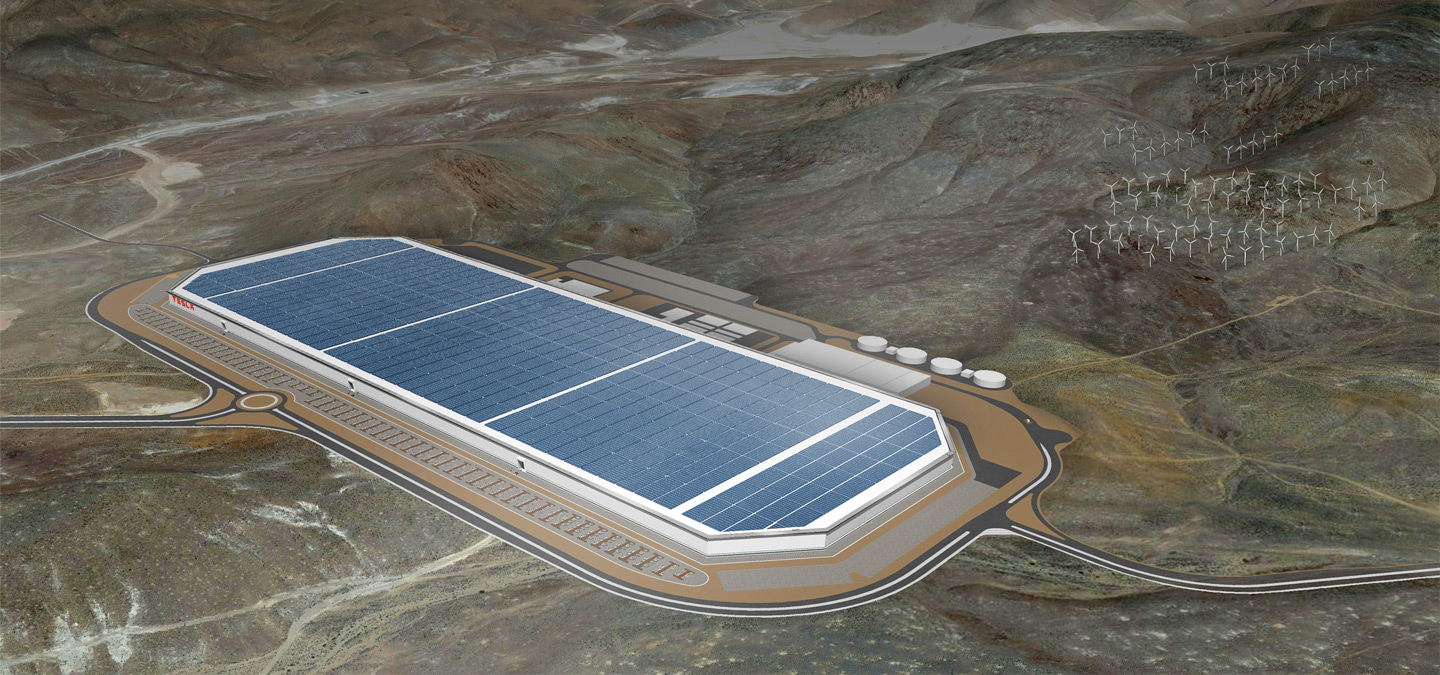
“With a planned production rate of 500,000 cars per year in the latter half of this decade, Tesla alone will require today’s entire worldwide production of lithium ion batteries. The Tesla Gigafactory was born of necessity and will supply enough batteries to support our projected vehicle demand.
Tesla broke ground on the Gigafactory in June 2014 outside Sparks, Nevada, and we expect to begin cell production in 2017. By 2020, the Gigafactory will reach full capacity and produce more lithium ion batteries annually than were produced worldwide in 2013.
In cooperation with Panasonic and other strategic partners, the Gigafactory will produce batteries for significantly less cost using economies of scale, innovative manufacturing, reduction of waste, and the simple optimization of locating most manufacturing process under one roof. We expect to drive down the per kilowatt hour (kWh) cost of our battery pack by more than 30 percent. The Gigafactory will also be powered by renewable energy sources, with the goal of achieving net zero energy.
The name Gigafactory comes from the factory’s planned annual battery production capacity of 35 gigawatt-hours (GWh).” (Tesla Motors)
Great Project and Vision! Congratulations to both Tesla and Matsushita (PANASONIC) for this “environment-friendly” business plan!!
Read more from:
https://www.teslamotors.com/en_GB/gigafactory
https://www.teslamotors.com/en_GB/blog/panasonic-and-tesla-sign-agreement-gigafactory
 www.gbmc-blog.biz