Category Archives: Business

Japan Retail: blossoming duty-free shops and the growing tourism market

Shopping in post-war Japan

Shopping in post-war Japan

Takashimaya to open airport-style duty-free shop in Shinjuku

“Major Japanese department store operator Takashimaya Co. plans to open an airport-style duty-free shop in Tokyo in a bid to capture the growing tourism market. Takashimaya will establish a company to operate the shop jointly with All Nippon Airways Trading Co., a unit of ANA Holdings Inc., and Hotel Shilla Co., an affiliate of South Korea’s Samsung Electronics Co. The duty-free shop will open within Takashimaya’s flagship store in the busy Shinjuku area in spring 2017, according to sources.”  (Japan Times)

In parallel with the soon expected “sakura” blossoming and other “hanami” activities, duty-free shops are blossoming and everywhere in Japan’s busy shopping malls and department stores. The latest trend is however towards “airport-style duty-free” shops, as described in this article. Waves of (Chinese) tourists are benefiting from the 8% tax discount (under some specific conditions, like foreign residency and minimum purchase amount of 5,000 or 10,000 JPY). Should we learn some lessons from this in France, Europe or even US? What do you think?


Read more from:  Japan Retail: blossoming duty-free shops and the growing tourism market


Sharp’s Air Purifying Technology Found Effective against Bird Flu

Testing Plasma cluster Ion Technology (Source - Sharp Corp)

Testing Plasma cluster Ion Technology (Source – Sharp Corp)


“Sharp Corporation announced on November 17 that it has found its air purifying technology is effective to inhibit bird flu virus.

Sharp plans to develop air cleaners and air conditioners using the “Plasma cluster Ion” technology to help prevent infections of the disease to humans.

Sharp conducted a joint research with Pasteur Institute in Ho Chi Minh City, Vietnam. They found that highly concentrated ions generated using the technology can decrease the infectiousness of H7N9 virus by 99 percent in a container box of 1 cubic meter for about 47 minutes.”      (Source: EU-Japan Centre)


More details from (in Japanese): Sharp’s Air Purifying Technology Found Effective against Bird Flu


Tokyo Institute of Technology and Fujitsu Achieve Wireless Transmission Speeds of 56 Gbps, World’s Fastest

Transceiver CMOS chip and module (Picture - Adalidda)

Transceiver CMOS chip and module (Picture – Adalidda)


“Tokyo Institute of Technology and Fujitsu Laboratories Ltd. today (1 February 2016) announced that, in an effort to further enlarge the capacity of wireless equipment, they have developed a CMOS wireless transceiver chip that can process signals at high speeds with little loss across a broad range of frequencies, from 72 to 100 gigahertz (GHz). They also developed technology to modularize it. With these developments, they succeeded in achieving wireless transmission speeds of 56 Gigabits per second (Gbps), the world’s fastest.”  (Source: Adalidda)


Impressive! What’s next?

More details from:  Tokyo Institute of Technology and Fujitsu Achieve Wireless Transmission Speeds of 56 Gbps, World’s Fastest


Japan is planning an “International Robot Competition” in 2020!!!

The future of robotics

The future of robotics


“A committee of experts to discuss an international robot competition that the Japanese government wants to hold in 2020 met for the first time on Feb. 2, and suggested that the competition cover three categories: product-making, services, and public interest projects. 

“Product-making” would cover fields like factory work and agriculture. “Services” events would include areas like customer service and providing care for the infirm. “Public interest” would cover fields like checks on public infrastructure and disaster rescue operations.”  (The Mainichi Shimbun)

Japan(2020) = (Olympics + Robots) x C2 !

Great but to which extend should humans push for robot development?

More details from:  Japan is planning an “International Robot Competition” in 2020!!!


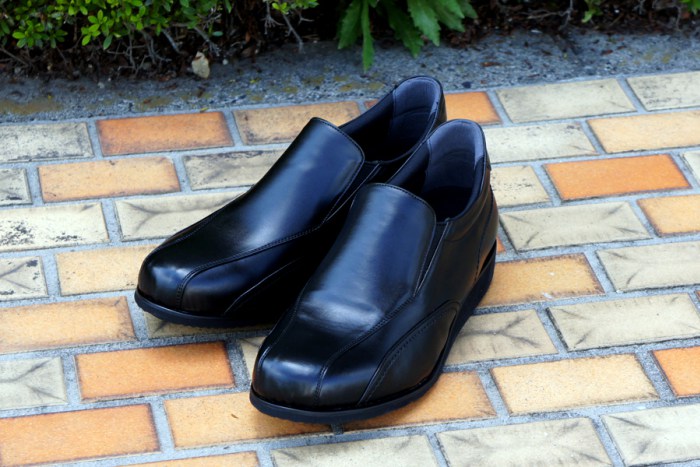
Japan: GPS Shoes to Help Track Elderly People with Dementia

Docodemo GPS Shoes (Picture - Docodemo)

Docodemo GPS Shoes (Picture – Docodemo)


A Kyoto-based company has started selling shoes with the global positioning system to help track down dementia-suffering seniors who wander off and often get lost.

The company which runs nursing homes experienced their inhabitants were getting lost for a short period of time. That was the reason for the company deciding to develop a special apparatus to prevent similar incidents.

The GPS terminal is implanted in the left heel of the “GPS Dokodemo (everywhere) Shoes,” and enables family members and caretakers to monitor the wearer by using smartphones or computers.”  (Source: EU -Japan Centre)


Great idea! Maybe this could also be used to track (younger) loved ones, lost while shopping in Department Stores or Shopping Malls? What kind of application would you like to suggest?


More details from (in Japanese):  GPS Shoes to Help Track Elderly People with Dementia


ANA and the A380: Airbus wins a new customer in return for invaluable Skymark support

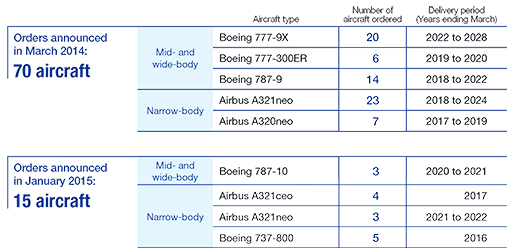
ANA_orders (Source - ANA)

ANA_orders (Source – ANA)


“ANA is likely to become an A380 operator, with three aircraft due for delivery from 2018. Operating the A380 was not in ANA’s plans. In fact, as ANA itself has itself stated, there are many arguments against taking A380.

The aircraft order appears to be a trade-off: ANA won the last minute support of Airbus to vote for its restructuring plan of the bankrupt Skymark Airlines. There was little obvious reason for Airbus to back ANA, a tiny Airbus customer, over the alternative restructuring plan proposed by Delta, itself a major Airbus operator. It may be that in exchange for Airbus’ support ANA agreed to do more business with Airbus.”    (CAPA – Center for Aviation)


Looking forward to more A380 and other Airbus orders (and, therefore, less Boeing orders) for the Japanese Market!! What do you think?


Read more from: ANA and the A380: Airbus wins a new customer in return for invaluable Skymark support


Electric planes aim to reach new heights

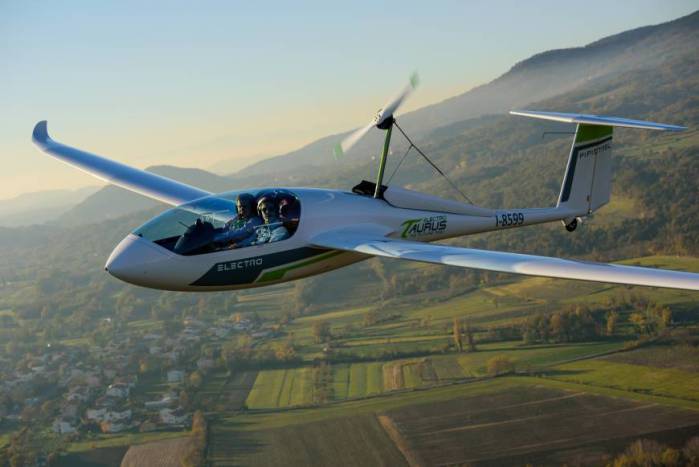
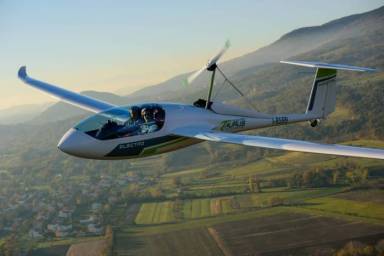
Pipistrel’s pioneering Taurus Electro - Electric Plane (Slovenia)

Pipistrel’s pioneering Taurus Electro – Electric Plane (Slovenia)


“Ultra-light, fast and cheap: more than a century after the Wright brothers flew the world’s first powered aircraft, a small Slovenian company now hopes to revolutionize the aviation industry with its award-winning electric planes.

Pipistrel’s pioneering Taurus Electro is seen as a breath of fresh air in a sector responsible for 13 percent of carbon dioxide emissions from all transport sources.

Launched in 2007, around 20 orders are now put in every year for the two-seater plane, which is produced in a factory in the town of Ajdovscina, close to the Italian border.

The €110,000 ($120,770) price tag is offset by the plane’s inexpensive maintenance: at 70 cents an hour, the Taurus is 10 times cheaper to run than traditional twin-seater planes, according to Pipistrel.

Simplicity is key: you charge the battery, hop inside the cockpit and hit the “on” button to activate the fuselage’s propeller.

The large-winged aircraft can thrust itself to an altitude of 2,000 meters (6,500 feet), after which the engine is retracted and the Taurus glides across the sky as a sailplane.

“You have just two buttons, up and down and full power, but you can always switch off immediately when you need to slow down the aircraft,” explained pilot Nejc Faganelj, soaring high above the Slovenian countryside on a sunny winter’s day.

But behind the deceptively easy usage lies a highly complex design. The most crucial element — and biggest challenge — is the lithium battery, which needs to be light yet sturdy so that it doesn’t catch fire if it overheats.

“To copy a design from the car industry is not that difficult. But to make something that is lighter, more efficient — that is definitely something that has not been done before,” said Pipistrel engineer Jure Tomaciz.

Now Pipistrel has even loftier ambitions: to sell the world’s first electric four-seater plane.

Its Taurus G4 prototype — built by combining two twin-seaters — won NASA’s prestigious Green Flight award in 2011, worth $1.35 million.

The plane covered 650 km (400 miles) in the space of two hours with an average speed of 172 kph.

“The car industry, with all the money it has at its disposal, and practically no weight limitation, even today isn’t capable of producing an electric car that would take four passengers for 600 km at a speed of 200 kph,” Pipistrel’s founder, Ivo Boscarol said.

“We did that with our electric plane,” he added.   (Source – Grendz)


Great vision and invention, in line with COP21!

We need more entrepreneurs like that! What do you think?

Read more fromElectric planes aim to reach new heights



European Countries Profile Handbook – Western Europe

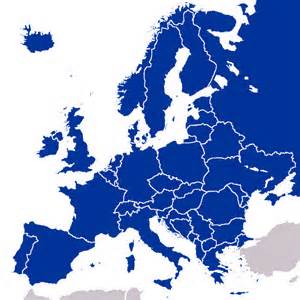
Map of Europe (Wikipedia)

Map of Europe (Wikipedia)

“GBMC Publications” is delighted to announce the Release of the following publication:

“European Countries Profile Handbook – Series 1 : Western Europe”

A Handbook by Motoko Inui Huysveld

(approximatively 65 pages)

January 2016 

This Handbook is intended to be a quick economic overview of 45 European countries and to highlight potential business segments for your business expansion into the European Market from a pan-European perspective.

Series 1 covers the following 9 countries of Western Europe:  France, Germany, Switzerland, Austria, Monaco, Liechtenstein, Belgium, Luxembourg and The Netherlands.

For more details, please check our website at:  http://www.gbmc.biz/Countries_Handbook.html


Railways Business: Franco-Japanese team shortlisted for new UK trains!

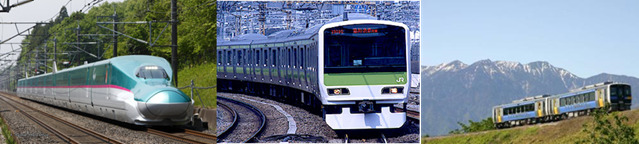
JR East Trains (Picture - JR East)

JR East Trains (Picture – JR East)

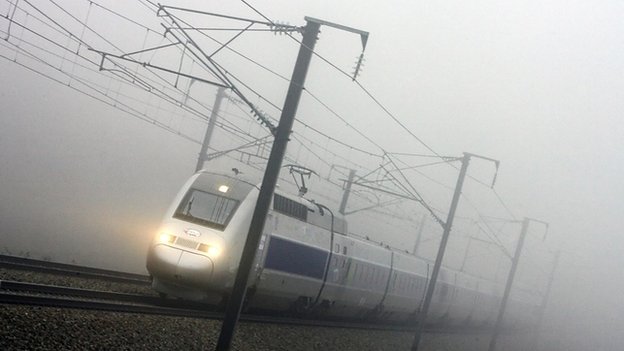
TGV_Alstom (Picture -Alstom)

TGV_Alstom (Picture -Alstom)


“Merseytravel, an executive body that provides professional, strategic and operational transport advice to the Liverpool City Region Combined Authority, announced on 11 January 2016 that five bidders including a team composed of  French and Japanese companies have been shortlisted for a contract to supply around 50 EMUs (Electric Multiple Units) for the Merseyrail network.

The Franco-Japanese team is composed of Mitsui, a major Japanese trading company, J-TREC, JR East’s subsidiary rolling stock manufacturing company, and France’s Alstom.

Bids are due to be submitted by the end of April and a preferred bidder will be identified towards the end of the year. The project is likely to cost around £400m.

This joint action between French and Japanese companies is the first of its kind in the European Union, and concrete business results are expected.”  (Source: JR East Newsletter #19)


More details about the bid at: Railways Business: Franco-Japanese team shortlisted for new UK trains!


Looking forward to more Europe-Japan collaborative projects on both sides!

This is probably the right approach to promoting the completion of an EU-Japan EPA!

What do you think?


About J-TREC:

“Japan Transport Engineering Company is a total transport engineering firm manufacturing rolling stock, cargo containers, railway tracks and turnouts with its 100% of stocks owned by East Japan Railway Company. Rail transport nowadays has become a part of modern social infrastructure and the pursuit of safety, assurance and comfort are at the core of our manufacturing philosophy.  Along the pursuit, our belief in manufacturing is to pay attention to every detail, even to those that are not visible at a glance.
The forerunner of our company is Tokyu Car Corporation which has realized the first domestic production of stainless steel rail cars in Japan. We will succeed all the technology and know-how that were acquired during its 63 years of history and leap into the next level by challenging the world market.”

(more details at: http://www.j-trec.co.jp/eng/company/index.html)


Japan’s GDP to rise by 2.59% under TPP

Business in Tokyo (Japan)

Business in Tokyo (Japan)


“The government said it expects the recently sealed Trans-Pacific Partnership trade pact to boost gross domestic product by ¥13.6 trillion or 2.59 percent from fiscal 2014 in its first estimate since the deal was struck in October.

Growth will be driven by exports and investment is to be facilitated by the removal or lowering of tariffs and unified international rules under the 12-nation free trade initiative.

While the expected growth will create 795,000 new jobs, or 1.25 percent of the 63.6 million-strong workforce in fiscal 2014, the trade pact will cause a ¥130 billion loss to the agriculture, forestry and fishery sector. This will become a mere ¥210 billion in size through competition with cheaper imports.

The government declined to clarify when the economic growth would be achieved. A government official said it usually takes one or two decades to create such an economic impact.

The free trade zone will cover 40 percent of the global economy.

The government will remove tariffs on 95.1 percent of imported products under the trade framework, as duties on some sensitive farm products will be maintained.

The pact is expected to take effect within about two years, Akira Amari, the Japanese minister in charge of the TPP, said last month. It requires ratification by member countries.

Meanwhile, there are many reasons why the forecasts may not bear out. The estimate is based on a future virtuous circle of economic growth and does not reflect the current economic environment.”    (Japan Times)


Will this deal deliver on the expected benefits/forecasts for each member country?

Will it be ratified by each country (including the US)?

What about China’s position vs TPP?

What do you think? 


Read more from:   Japan’s GDP to rise by 2.59% under TPP


Design a site like this with WordPress.com
Get started